Rucking vs Running: Which Is Better for Weight Loss and Longevity?

For most people—especially adults over 35, people with old injuries, people carrying extra bodyweight, and people who simply don’t enjoy running—Rucking is the better long-term choice for weight loss and longevity. Running can burn more calories per minute and is great for people who genuinely love it and tolerate it well. But Rucking is often easier to recover from, easier to stay consistent with, and gives you something running doesn’t: low-impact cardio plus load-bearing strength endurance in the same session. If your goal is to stay lean, strong, capable, and moving well for decades, Rucking is often the better foundation. Running still has value—especially as a sport and for people chasing speed—and Rucking is also one of the best cross-training tools runners can use.
Most people are asking the wrong version of this question
When people ask:
“Is Rucking or running better?”
they usually aren’t asking as a sports scientist.
They’re really asking:
- What can I actually stick with?
- What will help me lose weight without wrecking my joints?
- What should I do if running hurts?
- What should I do if I hate running?
- What will still serve me when I’m 50, 60, and beyond?
- What should I do if I’m a runner but need something smarter in my week?
That’s the real conversation.
And for most normal adults—not elite runners, not twenty-year-olds with bulletproof knees, not people training for a half marathon next month—Rucking is usually the better answer.

The simple truth
Running is excellent if:
- you like it
- your body tolerates it
- you recover from it well
- you actually keep doing it
That’s a lot of “ifs.”
Rucking has a different advantage:
It gives you a training effect that is:
- easier on the joints
- easier to recover from
- easier to progress gradually
- easier to turn into a repeatable habit
- and more useful for “real life strength”
That matters more than people think.
Because the best training method is not the one that looks best in a lab for 30 minutes.
It’s the one you can build your life around.
Best pick + runner up

Best pick for most people: Rucking
Who it’s for
- people over 35 or 40
- people with knee, shin, hip, or back history
- people who don’t like running
- people who want fat loss without punishment
- people who want to stay strong and capable as they age
- people who want a simple, outdoor, low-impact training habit
Why it wins
Rucking is one of the few things that checks all these boxes at once:
- cardio
- strength endurance
- posture
- bone-loading
- durability
- lifestyle friendliness
Runner-up: Running
Who it’s for
- people who genuinely enjoy running
- people training for races or speed
- people whose bodies tolerate impact well
- runners who want performance, not just general fitness
Running is great.
It’s just not the best default answer for most adults.
Why Rucking is better for most people

1) Most people don’t need more impact
A lot of adults already come into training with:
- tight calves
- stiff ankles
- old knee irritation
- cranky hips
- lower back tightness
- too much sitting
- extra bodyweight
Then they assume they should run because that’s what “fitness” is supposed to look like.
For a lot of those people, running is not the gateway to health.
It’s the gateway to:
- shin splints
- frustrated knees
- inconsistent training
- feeling like exercise “just isn’t for them”
Rucking gives those same people a better on-ramp.
You still get:
- brisk locomotion
- elevated heart rate
- calorie burn
- mental clarity
- resilience
But without the same joint pounding.
2) Rucking is easier to stay consistent with
This is the biggest thing.
Weight loss and longevity are not one-workout problems.
They are consistency problems.
Running might burn more calories per minute.
Cool.
But what matters more over 6 months?
- the workout that burns slightly more in 30 minutes
- or the workout you’ll happily do 3–5 times per week for years?
For most people, Rucking wins that contest.
Because it feels like:
- walking with purpose
- outdoor training
- a challenge, but not punishment
That changes everything.
3) Rucking builds more “real world” strength
Running is mostly a locomotion sport.
Rucking is locomotion under load.
That difference matters.
Rucking trains:
- legs
- feet
- calves
- glutes
- upper back
- trunk stiffness
- postural endurance
- carry capacity
That means it transfers better to real life:
- hiking
- carrying kids
- luggage
- groceries
- travel
- hunting
- long days on your feet
- just being a durable human
If your definition of fitness includes “useful strength,” Rucking has a real edge.
4) Rucking often works better for people who hate running
This matters more than fitness culture admits.
A lot of people just do not like running.
They don’t like:
- the impact
- the feeling of bouncing
- the breathing discomfort
- the repetitive boredom
- the sense that it’s all punishment and no reward
And every time they try to become “a runner,” they fail, then assume they failed fitness.
That’s nonsense.
You do not need to become a runner to become fit.
For a lot of people, Rucking is the first thing that finally clicks because it feels:
- grounded
- strong
- outdoor-oriented
- mentally easier
- physically more manageable
That matters.
Specific examples: who should choose what?

1) The overweight beginner who wants to lose 20–40 pounds
This person says:
“I know I should do cardio, but every time I try running I feel heavy, awkward, or beat up.”
Better choice: Rucking
Why?
Because this person usually needs:
- lower impact
- manageable intensity
- a win they can repeat
- not another exercise experience that makes them feel broken
A 30–45 minute Ruck done consistently will do more for this person than sporadic painful jogs.
What I’d tell them
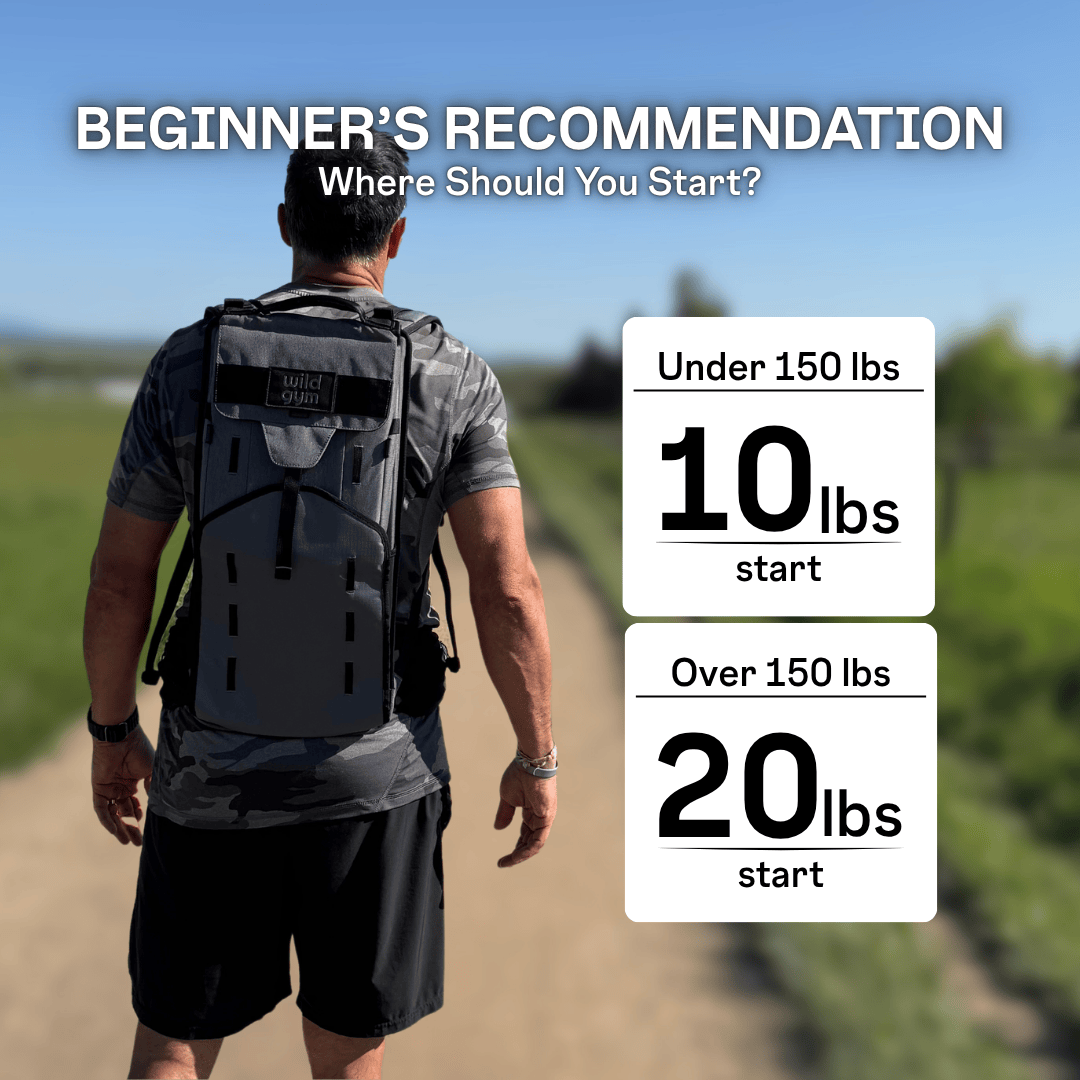
Start with:
- 10–20 lb
- 20–30 minutes
- 3x/week
- flat route
Then build from there.
That’s a much better long game.
2) The 45-year-old guy with old knee pain who “used to run”
He says:
“Running used to feel easy. Now it feels like a joint negotiation.”
Better choice: Rucking
This is exactly where Rucking shines.
He doesn’t need more impact.
He needs:
- steady cardio
- lower-body strength endurance
- posture work
- consistency
- something that makes him feel athletic again
That’s Rucking.
Not because running is evil.
Because it’s no longer the best tool for the job.
3) The woman over 40 who wants fat loss, bone support, and longevity
She says:
“I want to stay strong and lean, but I don’t want workouts that trash me.”
Better choice: Rucking
Especially when paired with strength training.
Why?
Because she gets:
- weight-bearing movement
- a stronger training signal than normal walking
- low-impact cardio
- outdoor consistency
- a training habit that doesn’t feel punishing
For this person, Rucking is often the better “default cardio” than running.
4) The person who hates running but still wants to be fit
They say:
“I’ve tried to make myself into a runner for years. I never stick with it.”
Better choice: Rucking
This is the easiest call in the world.
Stop trying to force a training identity that doesn’t fit.
If you hate running, you do not need to marry it.
Rucking gives you:
- structure
- challenge
- cardio
- strength
- outdoor time
without requiring you to become someone you’re not.
That’s not “settling.”
That’s choosing the right tool.
5) The actual runner who wants to perform better and stay healthier
They say:
“I love running, but I’m always a little beat up. Is Rucking useful or just extra fatigue?”
Best answer: Rucking is phenomenal cross-training for runners
This is one of the most under-appreciated use cases.
Rucking is great for runners because it can build:
- low-impact aerobic volume
- leg strength endurance
- foot and calf resilience
- posture and upper-back endurance
- hiking/trail carryover
- extra training time without the same pounding
It can also give runners a better option on:
- recovery days
- base-building blocks
- post-race rebuild periods
- niggle-management weeks
- days when they want to move but not run
Why runners benefit from Rucking
Running is impact-dominant.
Rucking is load-dominant.
That difference is gold.
A runner can use Rucking to:
- maintain aerobic work
- build durability
- keep training when impact has to come down
- avoid turning every conditioning day into another run
That’s huge.
How runners should use Rucking
Here’s the mistake runners make:
They add Rucking like it’s another hard workout.
That’s not the move.
For most runners, Rucking works best as:
1) Easy aerobic cross-training
Swap one easy run for:
- a 30–60 minute brisk Ruck
- moderate load
- conversational pace
2) Recovery-day movement
If you want to move but your legs are cooked from intervals or long runs:
- short easy Ruck
- flat route
- light load
3) Off-season base work
Rucking is amazing when you want to:
- stay fit
- keep bodyweight in check
- build durability
- reduce impact exposure
4) Return-to-run bridge
If a runner is coming back from irritation or overload, Rucking can keep them training while reducing the pounding.
That’s a huge benefit.
When running is still the better choice
Let’s be fair.
Running is still the better choice when:
- your goal is race performance
- you love it
- your body tolerates it well
- you want higher intensity cardio in less time
- you’re chasing speed or running-specific endurance
If your goal is to run a fast 10K, you should run.
But that’s not most people’s actual goal.
Most people’s real goal is:
- get leaner
- feel stronger
- have better energy
- stay healthy
- avoid injury
- train in a way they can sustain
For that, Rucking is often better.
Weight loss: the answer most people need

If your main goal is weight loss, here’s the honest answer:
Running wins per minute. Rucking often wins per month.
That’s because Rucking is usually:
- easier to recover from
- easier to repeat
- easier to do longer
- easier to fit into daily life
And weekly consistency beats theoretical intensity.
A person who Rucks:
- 4 times per week
- 45 minutes each
- for 8 months
is going to beat the person who “tries to get back into running” every third Monday.
That’s just reality.
Longevity: where Rucking really separates itself
Longevity is not just about cardiovascular output.
It’s also about:
- load tolerance
- posture
- muscle retention
- foot and ankle health
- joint friendliness
- bone-loading
- staying active in the real world
Rucking is incredibly strong here because it blends:
- locomotion
- load-bearing
- simplicity
- sustainability
It’s one of the few tools that can meet a person where they are at 35, 45, 55, and beyond.
That’s why I lean so hard toward it for most adults.
Sample weekly setups
1) The person who hates running and wants fat loss
- Monday: 30 min Ruck
- Wednesday: 35 min Ruck
- Friday: 30 min Ruck
- Saturday: 45–60 min longer Ruck
That’s a great week.
2) The over-40 adult chasing longevity
- Tuesday: 30–40 min Ruck
- Thursday: 30–45 min Ruck
- Sunday: 60 min outdoor Ruck
- Add 2 strength sessions if possible
That’s an excellent foundation.
3) The runner using Rucking as cross-training
- Monday: easy run
- Wednesday: 40 min Ruck
- Friday: quality run
- Sunday: longer Ruck or hike
- This is a smart hybrid setup.
Final thought
If you love running and it loves you back, keep running.
But for most people—especially people with injuries, stiff joints, extra bodyweight, or a simple dislike of running—Rucking is the better bet.
It is easier to sustain.
Easier to recover from.
More useful in real life.
And for a lot of adults, better aligned with the actual goal:
not just burning calories today…
but staying strong, capable, lean, and adventurous for a long time.
Walk with weight.
Build a body that lasts.
FAQ
Use this text to share information about your product or shipping policies.
Is rucking better than running for weight loss?
For most people in the real world, often yes—because it’s easier to do consistently and recover from. Running burns more per minute, but rucking often wins as a long-term habit.
Is rucking better than running for longevity?
For many adults, yes. It’s lower impact, load-bearing, and easier to keep doing for decades.
What if I have injuries or old joint pain?
That is exactly where rucking becomes a better option for many people. Start light, stay flat at first, and progress gradually.
What if I don’t like running?
Then stop trying to force it as your main tool. Rucking is one of the best alternatives because it still gives you real training value.
Is running bad?
No. It’s just not the best default answer for everyone.
Can runners benefit from rucking?
Absolutely. It’s one of the best cross-training tools runners can use for aerobic work, strength endurance, recovery days, and off-season durability.
Can rucking replace running?
For general health, fat loss, and longevity—yes, for many people. For race performance, no.
Which is better for over-40 adults?
For most over-40 adults, rucking is the more forgiving and sustainable default.
Which is better for people carrying extra weight?
Usually rucking. The lower impact makes it a better on-ramp.
What’s the best overall answer?
For most people: make rucking the foundation.
Then run if you enjoy it and your body likes it.
Featured collection