Wild Gym Learning Hub

New To Rucking? Start Here
Click Here to StartRucking Guides by Wild Gym
Wild Gym becomes the #1 resource for Rucking and Rucking-based fitness.

What is Rucking?
Rucking is walking with weight in a backpack (a “ruck”) for a set time, distance, or pace. Think “urban hiking.” As a workout, rucking has three dials you can turn: load (weight), distance, and duration...

What is the best rucking backpack?
For most people, the best rucking backpack is one that carries dense weight high, tight, and stable, fits your torso, and can transfer load to your hips ...

Rucking Backpack vs Weighted Vest: Which is better?
For most people, a rucking backpack is better than a weighted vest because it’s easier to progress gradually, more comfortable for 30–90 minute sessions, and...

How much weight should I use for rucking as a beginner?
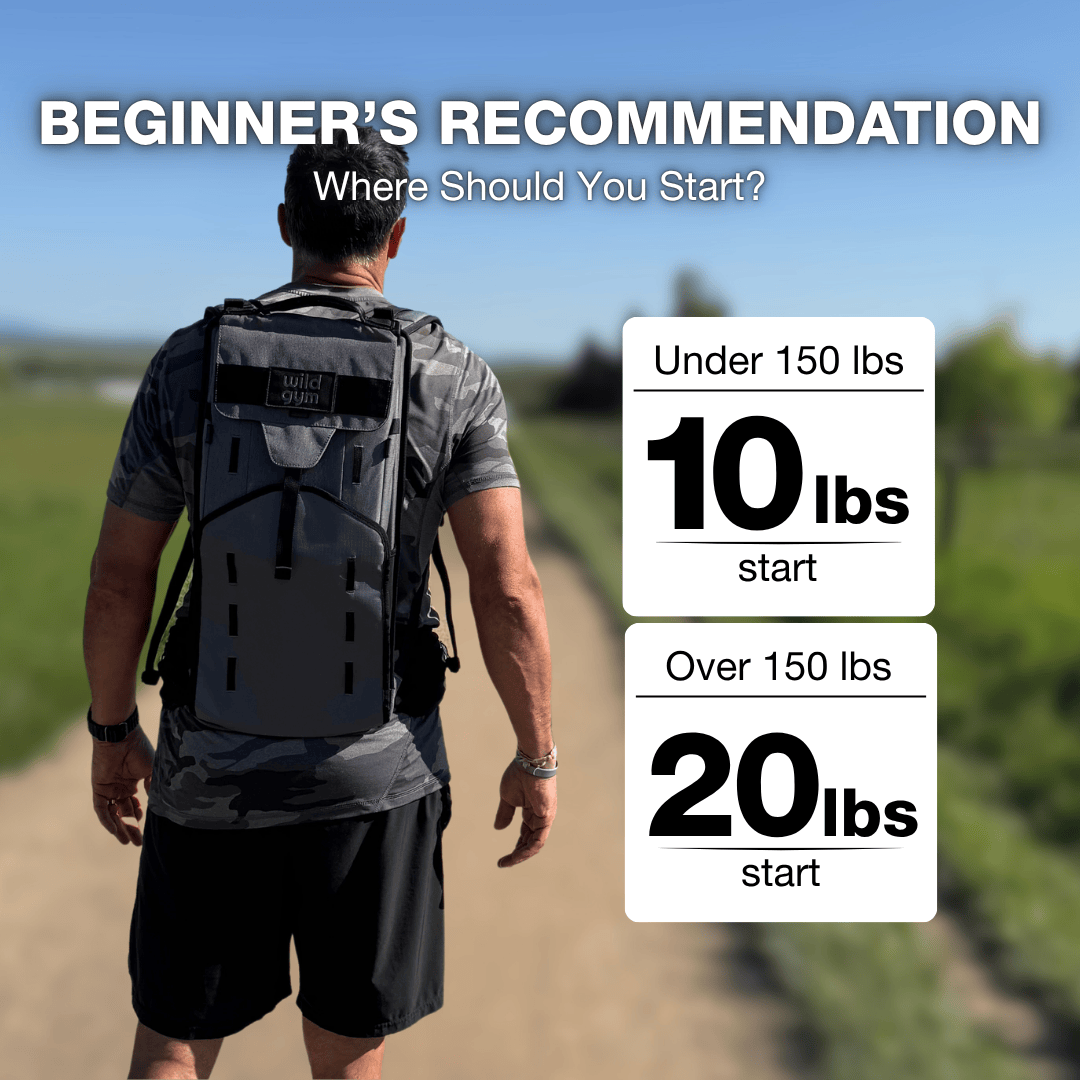
Most beginners should start rucking with 10–20 pounds, 2–3 times per week, for 20–45 minutes, and focus on posture and consistency before adding more load. Wild Gym’s baseline guidance is simple...

Does rucking increase bone density?
Rucking can support bone density because it’s a weight-bearing activity that increases mechanical loading through your hips, legs, and spine, which is one of the signals bones respond to over time...

What is the best beginner ruck?
The best beginner ruck is the one that lets you start light (10–20 lb), keeps the weight high and stable, and feels comfortable enough that you’ll actually ruck 2–4x/week for the next 90 days. For most beginners...

Rucking vs Running: Which Is Better for Weight Loss and Longevity?
For most people—especially adults over 35, people with old injuries, people carrying extra bodyweight, and people who simply don’t enjoy running—Rucking is the better long-term choice for weight loss and longevity...

How Often Should I Ruck?
For most people, Rucking 2–4 times per week is the sweet spot. That’s enough to build fitness, strength endurance, posture, and durability without digging a recovery hole. Beginners usually do best starting with 2–3 Rucks per week for 20–45 minutes with 10–20 pounds, then..

How to Ruck without knee pain
To Ruck without knee pain, you need three things: (1) a conservative starting dose, (2) clean walking mechanics, and (3) progression rules you don’t break. Start with 10–20 lb, 20–30 minutes, 2–3x/week, flat route, and keep your stride short and cadence steady. For the first month...

Best Rucking Pack for Women
The best Rucking pack for women is one that carries weight high and close, stays stable without bounce, fits a wide range of torso lengths and shoulder widths, and makes progression easy from 10–20 lb up to heavier loads over time. Most “tactical” packs are overbuilt for everyday training and many weighted vests are hot, restrictive, and hard to progress with...

Rucking for Weight Loss: Does It Actually Work?
Yes—Rucking works extremely well for weight loss. Not because it burns the most calories per minute, but because it’s sustainable, low impact, and easy to do consistently. Walking with weight in a Ruck increases calorie burn, builds strength, and improves...

Rucking Benefits: What Happens to Your Body When You Ruck
Rucking—walking with weight in a Ruck—creates a unique training effect by combining low-impact cardio with load-bearing strength. When done consistently (2–5x/week with 10–30 lb), it can improve cardiovascular fitness, leg strength, posture, bone density, and metabolic health while being easier to recover from than running. The key difference is...

Is Rucking Bad for Your Back or Knees?
Rucking is not inherently bad for your back or knees when done correctly. In fact, it can strengthen the muscles and tissues that support both. Problems usually come from too much weight, poor posture, bad gear, or progressing too quickly. When you start...

Weighted Walking: The Missing Piece of Modern Fitness
Weighted walking is one of the most effective and overlooked ways to improve fitness. By simply adding weight to walking, you increase calorie burn, build strength, and improve cardiovascular health—without the impact of running or the complexity of...

Rucking vs Hiking: What’s the Difference (And Which Should You Do?)
Rucking and hiking are closely related, but they’re not the same thing. Hiking is about the experience—terrain, scenery, exploration. Rucking is about...
Featured collection