Is Rucking Bad for Your Back or Knees?

Rucking is not inherently bad for your back or knees when done correctly. In fact, it can strengthen the muscles and tissues that support both. Problems usually come from too much weight, poor posture, bad gear, or progressing too quickly. When you start light (10–20 lb), maintain good posture, and build gradually, Rucking is one of the most joint-friendly, sustainable ways to build strength and cardio at the same time. If you feel sharp or worsening pain while Rucking, stop and reassess before continuing.
First, A Quick Disclaimer
You should always consult your doctor before starting any exercise program.
Use common sense.
If your knee or back hurts while Rucking — stop immediately.
There’s a difference between:
- Effort
- Discomfort
- Pain
Rucking should feel like work.
It should not feel like damage.
The Short Answer
No.
Rucking is not bad for your back or knees.
But it can become a problem if you do it wrong.
And most people who run into issues tend to make the same few mistakes.
Why People Think Rucking Is Bad for Joints
On the surface, it makes sense.
You’re adding weight.
You’re moving for long periods.
So people assume:
“More weight = more joint stress = bad idea.”
But that’s not how the body works.
Your body is designed to:
- Adapt To Load
- Get Stronger Over Time
- Become More Durable With Exposure
The key is applying that load correctly and progressively.
What Actually Causes Back or Knee Pain While Rucking

It’s usually not the Rucking.
It’s how it’s being done.
1. Starting Too Heavy
This is the #1 mistake.
People jump in with:
- 30 lb
- 40 lb
- or more
before their body is ready.
That overloads:
- knees
- hips
- lower back
Better approach:
- Start With 10–20 lb
- Build slowly over weeks, not days
2. Poor Load Position
If the weight sits:
- low
- far away from your back
it pulls your posture forward.
That creates:
- lower back strain
- inefficient walking mechanics
Better approach:
- Keep the load High, Tight, And Close To Your Body
3. Bad Posture While Walking
Common issues:
- leaning forward
- slouching
- overstriding
These increase stress on:
- knees
- lower back
Better approach:
- Stand Tall
- Shorten Your Stride Slightly
- Walk Smooth, Not Aggressive
4. Progressing Too Fast
Even if you start light, problems happen when you:
- increase weight too quickly
- increase distance too quickly
- add hills too soon
Better approach:
Progress in this order:
- Time
- Distance
- Terrain
- Weight (last)
5. Using the Wrong Gear
Not all backpacks are built for Rucking.
If your pack:
- shifts around
- bounces
- distributes weight poorly
you’ll feel it in your joints.
Better approach:
Use a Ruck designed to:
- keep weight stable
- distribute load properly
- support your posture
What Rucking Actually Does For Your Back and Knees (When Done Right)

This is where things flip.
When done correctly, Rucking can actually make your body more resilient.
For Your Knees
Rucking helps build:
- Stronger Quads
- Stronger Glutes
- Better Joint Stability
These muscles act like shock absorbers.
Stronger muscles = less stress on the joint itself.
For Your Back
Rucking builds:
- Postural Strength
- Upper Back Endurance
- Core Stability
When the load is positioned correctly, your body learns to:
- resist collapsing forward
- stay upright under load
That’s a powerful training effect.
For Your Entire System
Rucking provides:
- Load Without High Impact
- Repetition Without Trauma
- Stress That Builds Durability
This is exactly the kind of training most people need more of.
When Rucking Might Not Be a Good Idea (Right Now)
Rucking isn’t for everyone at every moment.
You may want to pause or modify if you have:
- Acute Injury
- Sharp Or Increasing Pain
- Unresolved Knee Or Back Issues
That doesn’t mean “never.”
It means:
- adjust
- reduce load
- rebuild gradually
How to Ruck Without Hurting Your Back or Knees
Keep this simple.
Start Here
- 10–20 lb
- 20–30 minutes
- Flat terrain
- 2–3x per week
Focus On Form
- Stand Tall
- Keep Weight High And Close
- Walk Smooth And Controlled
Progress Slowly
- Add time before weight
- Add hills later
- Increase load gradually
Listen to Your Body
- Fatigue is normal
- Mild soreness is normal
- Pain is not
The Real Truth
Rucking doesn’t break your body.
Bad programming does.
Too much weight.
Too soon.
With poor form.
Fix those, and Rucking becomes one of the most joint-friendly, sustainable ways to train.
Final Thought
If your goal is to:
- Stay strong
- Stay mobile
- Build endurance
- Avoid unnecessary wear and tear
Rucking is one of the best tools you can use.
Not because it’s easy.
But because it’s repeatable.

Throw on a Ruck.
Add a little weight.
Walk.
Build slowly.
Stay consistent.
And your body will adapt the way it’s supposed to.
FAQ
Use this text to share information about your product or shipping policies.
What is rucking in one sentence?
Rucking is walking a set time or distance while carrying weight in a backpack.
Is rucking just hiking?
It’s related. Hiking is usually trails, terrain, and gear. Rucking is defined by the added weight, and it can be done anywhere, sidewalks included.
Do I need a special rucking backpack?
No. You can start with any backpack. But if you want it to be comfortable and scalable, a ruck with stable weight placement is a game-changer.
How much weight should I start with?
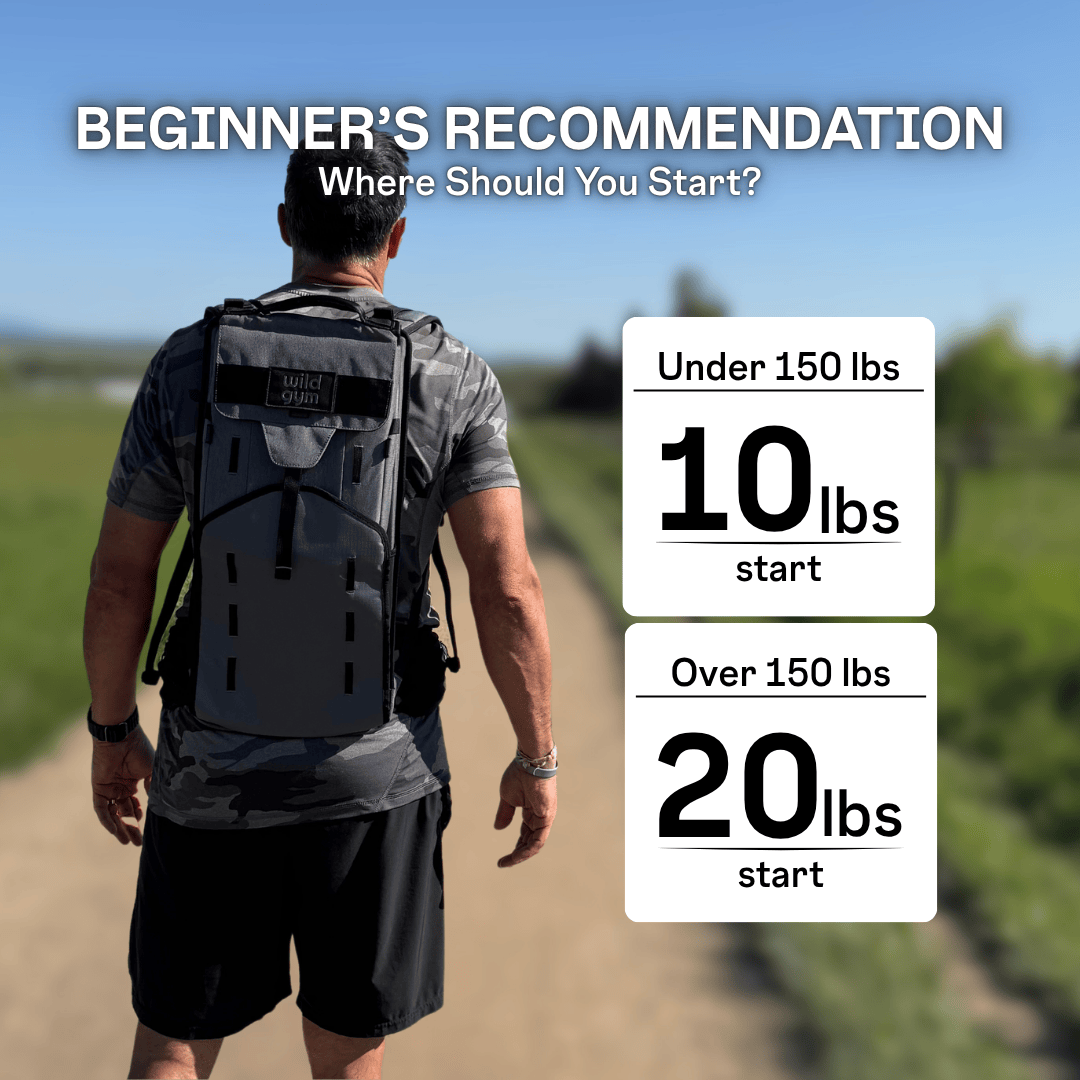
Wild Gym recommends 10–20 lb, with a simple rule: over 150 lb start at 20; under 150 start at 10.
How often should beginners ruck?
Start “a few times per week.” Wild Gym suggests starting with rucking a few times per week and building from there.
How long should a beginner ruck be?
Start with 20–30 minutes. Add time before you add a bunch of weight.
What pace should I ruck?
Brisk but controlled. You should be able to speak in sentences. If you’re redlining, it’s too heavy or too fast.
Does rucking build muscle?
It builds strength endurance and “carry strength.” If you want more muscle and bone stimulus, pair rucking with 2–3 simple strength sessions per week.
Is rucking safe for knees?
For many people it’s lower impact than running, but it’s not immune to overuse if you ramp too fast. Start light, keep the load stable, and avoid steep hills early.
What’s the best way to start if I’m totally out of shape?
Start with walking first. WebMD suggests you should be able to walk about 30 minutes comfortably before adding load. Then add 10 pounds and keep it short.
Featured collection