Rucking Backpack vs Weighted Vest: Which is better?

For most people, a Rucking backpack is better than a weighted vest because it’s easier to progress gradually, more comfortable for 30–90 minute sessions, and more practical in real life since it can carry water, layers, and essentials. Weighted vests can be useful for short workouts (stairs, step-ups, 10–30 minute walks), but most have major downsides: they’re often hard to adjust in small weight jumps, can feel hot and restrictive, tend to hold sweat and smell, and offer little to no storage. If you want a sustainable, low-impact training habit you’ll actually keep, start with a Rucking backpack and consider a vest later as an occasional tool.
The real difference: a system vs an accessory
Both Rucking backpacks and weighted vests “add load” to walking.
But they’re not equal tools.
-
A Rucking backpack is a system: you can scale weight in small steps, stay comfortable longer, and bring what you need (water, phone, layers, snacks, dog leash, etc.).
-
A weighted vest is usually an accessory: quick to throw on, good for short sessions, but it’s often the wrong tool for long-term progression.
If your goal is longevity fitness, you want the thing you’ll do consistently without turning every workout into a gear fight.

Best pick + runner up
Best pick for most people: Rucking backpack
Who it’s for
-
Beginners through intermediate ruckers
-
People building a 3–5x/week habit
-
Anyone who wants longer Zone 2 sessions (30–90 minutes)
-
People who want gradual progression without buying new gear
Why it wins
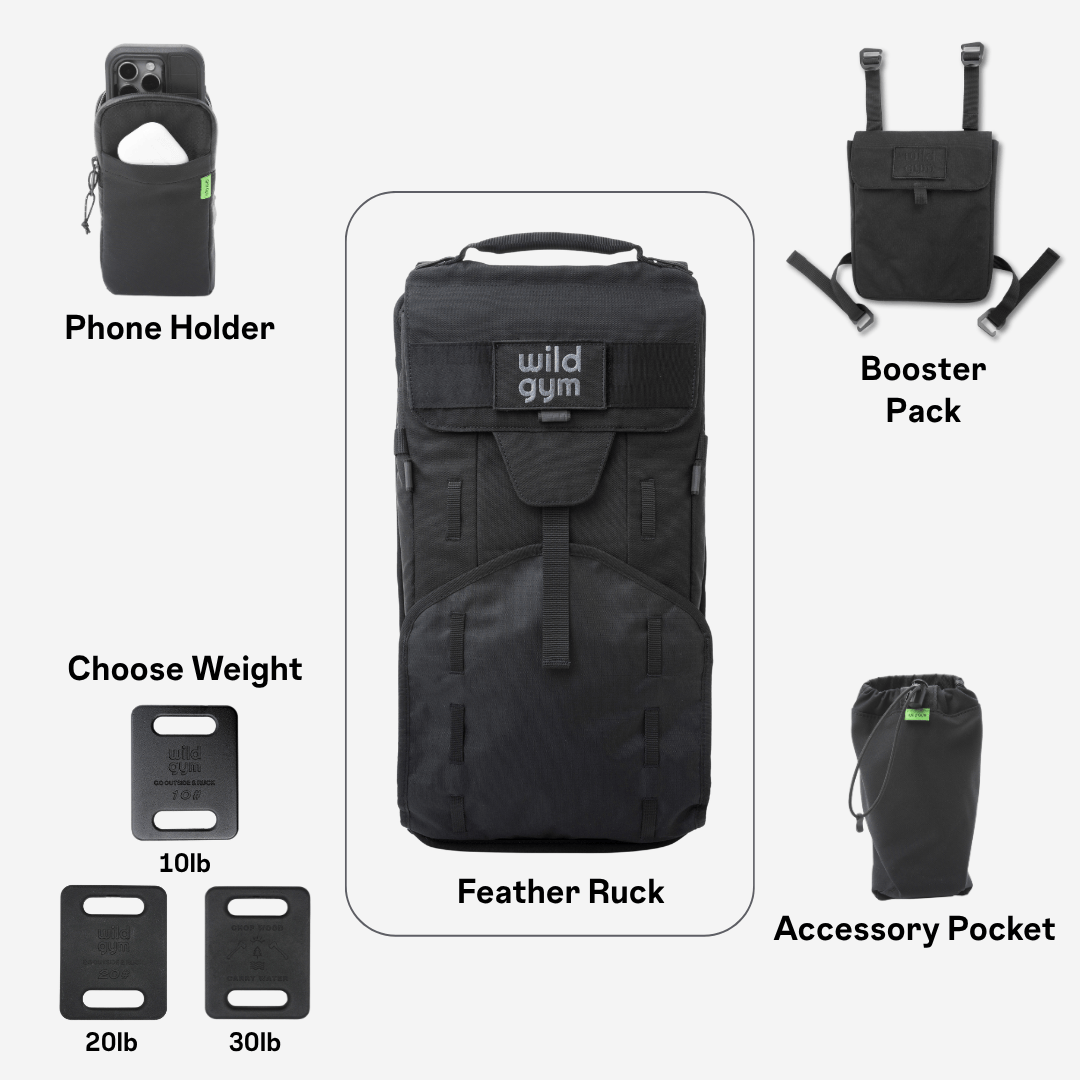
Rucking backpacks (when designed for plates) let you:
-
adjust load easily (10 → 15 → 20 → 25…)
-
keep weight high and stable
-
stay comfortable for longer sessions
-
carry your essentials so training fits into life
Runner-up: Weighted vest
Who it’s for
-
Already-fit people who want a quick “make it harder” tool
-
Short sessions like stairs, step-ups, incline treadmill, 10–30 minute walks
-
People who strongly dislike backpacks
Why it can work
The load is close to your torso and it’s fast to put on. For short workouts, that can be a win.
Comparison table: real-world differences
|
Category |
Rucking backpack |
Weighted vest |
|
Session length sweet spot |
30–90+ min |
10–30 min (often best tolerated) |
|
Progression |
Easy small jumps (plates, time, hills, pace) |
Often clunky: limited increments or awkward swaps |
|
Comfort |
Usually better over time if weight is stable + pack fits |
Can feel restrictive, rub, compress ribs/shoulders |
|
Heat & sweat |
Back sweat happens, but chest stays open |
Usually hotter (covers torso) |
|
Odor |
Easier to air out and clean like normal gear |
Often traps sweat, can get funky fast |
|
Adjustability |
Straps/fit adjustments + load placement |
Many fit “okay” but not great; limited size adjustability |
|
Storage |
Yes (water, layers, essentials) |
Usually no (or minimal) |
|
“Leveling up” cost |
Add a plate or increase time/hills |
Often requires a heavier vest or a second vest |
|
Best use cases |
Zone 2 walks, hiking fitness, daily training habit |
Stairs/step-ups, short intensity blocks, occasional use |
The biggest downsides of a weighted vest
This is the stuff people don’t talk about enough, and it’s why many vests end up in the garage.
1) Weight progression is limited or annoying
With Rucking, progression is simple:
-
add 5–10 lb
-
add 10–15 minutes
-
add a hill
-
walk slightly faster
With many vests:
-
you can’t adjust in small jumps (or it’s a hassle)
-
the “next level” often means buying another vest
-
heavier vests fit worse, move more, or feel more restrictive
If your tool makes progression annoying, consistency dies.
2) They get hot and feel restrictive
A vest wraps your torso. That means:
-
more heat
-
more sweat
-
sometimes a “compressed” feeling when breathing hard
For short sessions it’s fine. For longer sessions, a lot of people start hating it.
3) They tend to smell weird
This is real. Vests trap sweat in padding and fabric layers, and if they don’t dry perfectly they can develop a permanent funk.
Some also have a “materials smell” depending on construction.
Rucks can get sweaty too, but they air out more like normal backpacks.
4) Fit isn’t truly adjustable for most bodies
A vest that doesn’t fit perfectly will:
-
rub the neck/arms
-
bounce
-
shift
-
pinch
-
feel like armor
And once you add weight, fit issues usually get worse.
5) No storage kills real-life consistency
This one matters more than people think.
If you can’t carry:
-
water
-
phone/keys
-
a layer
-
snacks
-
dog stuff
…then you’re less likely to use it for longer walks, hikes, or “walk out the door” training.
That’s where Rucking backpacks shine. They blend training into life.

Why a Rucking backpack tends to win for over-40 fitness
Most Wild Gym customers are doing Rucking because they want:
-
low-impact conditioning (without running)
-
strength and posture work baked into walking
-
a habit they can maintain for decades
-
a tool that supports adventure (trails, hills, travel)
A Rucking backpack checks those boxes because it’s:
-
easier to progress
-
easier to use for longer
-
more practical
-
more comfortable when the pack is designed for plates and fit
How to choose in 90 seconds
Choose a Rucking backpack if you want:
-
A sustainable 3–5x/week habit
-
Longer sessions (30–90 minutes)
-
Smooth progression without buying new gear
-
Storage for essentials
-
A tool that feels like training + adventure
Choose a weighted vest if you want:
-
Short workouts (10–30 minutes)
-
Stairs/step-ups/incline treadmill work
-
Quick on/off convenience
-
An occasional add-on tool, not your main system
If you’re torn:
Start with Rucking. Add a vest later as a “spice,” not the main course.
Two simple starter plans
Plan A: Rucking-first (most people)
-
2–4 Rucks/week
-
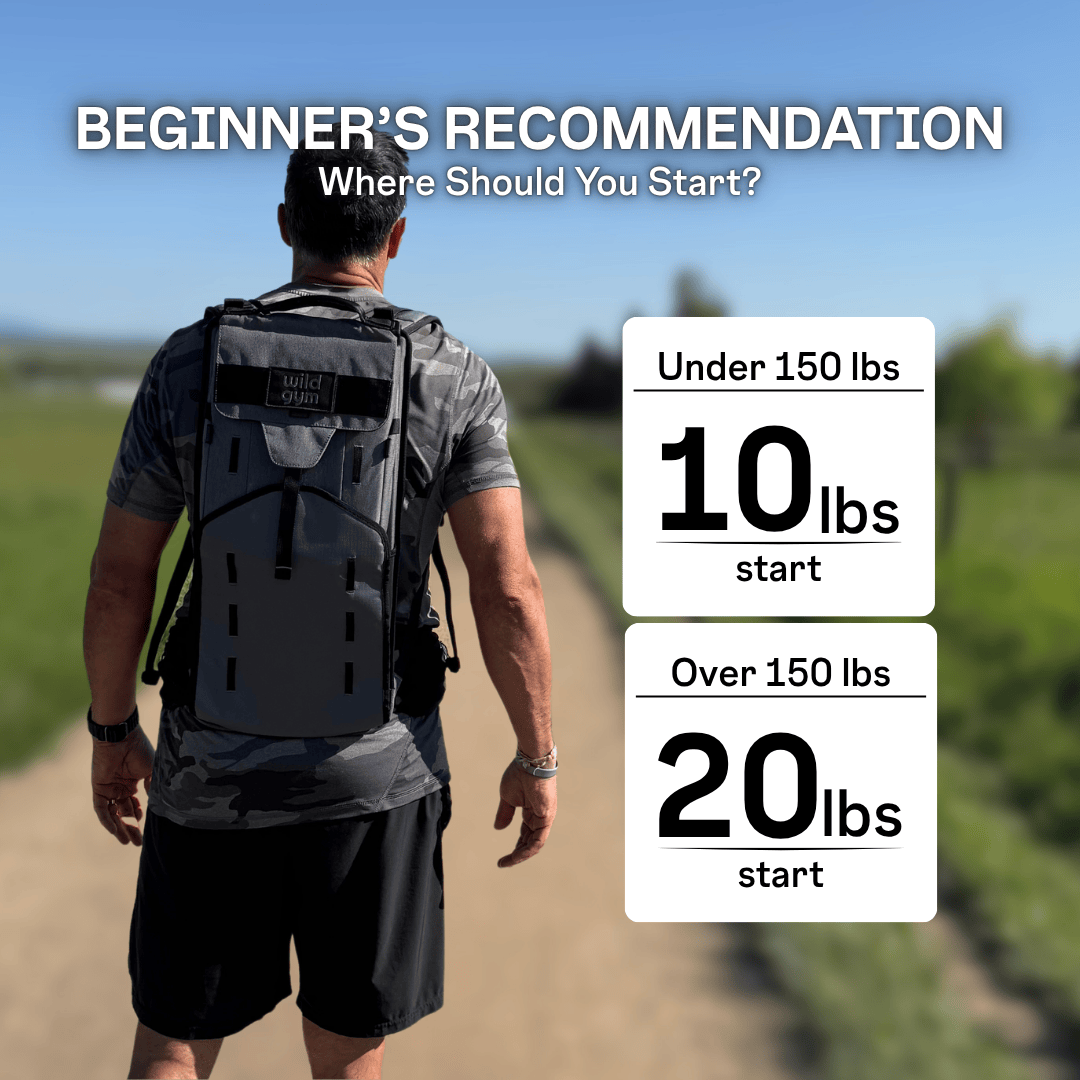
Start 10–20 lb
-
20–45 minutes
-
Progress one variable at a time:
-
-
Week 1–2: add time
-
Week 3–4: add a hill or add 5–10 lb
-
Then repeat
-
Plan B: Vest (already fit)
-
1–3 sessions/week
-
10–30 minutes
-
Use for stairs/step-ups/walks
Keep it easy at first (don’t stack weight + intensity + volume all at once)
FAQ
Which is better for beginners?
A rucking backpack. It’s easier to control load, easier to stay comfortable, and easier to stick with long term.
What’s the #1 reason people quit using a weighted vest?
Friction: poor adjustability, heat/smell, fit discomfort, and the fact that leveling up often means buying another vest.
What’s the #1 reason people quit rucking?
They use a normal backpack with loose weight, it bounces/sags, and it feels terrible. A stable plate setup fixes most of that.
Which is better for Zone 2 cardio?
Rucking, because it’s naturally suited to longer steady sessions.
Which is better for fat loss?
Whichever you’ll do consistently. In practice, rucking often wins because people tolerate it longer and do it more frequently.
Which is better for bone health?
Both add load to walking, but bone health is best supported by a progressive plan and usually some strength training too. Don’t rely on one tool alone.
Which is safer for knees and back?
Both can be safe if you start light and progress gradually. The bigger risk is jumping load too fast, especially with hills, stairs, or long sessions.
Do I need both?
No. Most people don’t. If you want both, make the ruck your foundation and use the vest occasionally.
If I hate backpacks, should I force rucking?
No. If you hate backpacks, a vest might be your tool. Just accept the downsides and keep sessions shorter.
If I could only buy one “walking with weight” tool, what should it be?
A rucking backpack system. It’s more adjustable, more practical, and easier to progress for years.
Featured collection