How Much Weight Should I Use for Rucking as a Beginner?

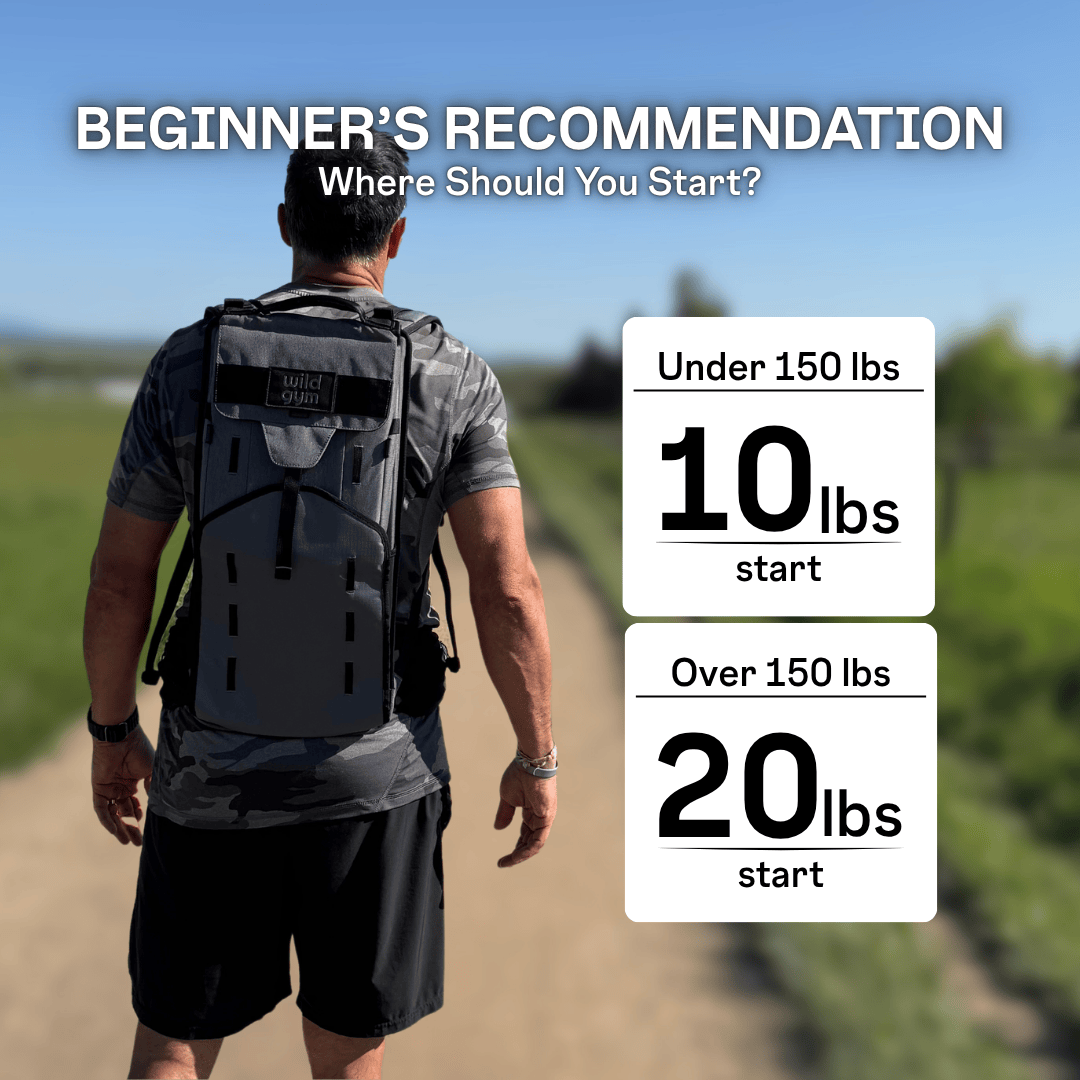
Most beginners should start Rucking with 10–20 pounds, 2–3 times per week, for 20–45 minutes, and focus on posture and consistency before adding more load. Wild Gym’s baseline guidance is simple: most people can start with 10–20 lb; if you’re over 150 lb start at 20, and if you’re under 150 lb start at 10. A good “beginner Ruck” should feel like brisk walking with purpose, not a grind. Progress one variable at a time (time, hills, or weight), and if you get sharp pain, numbness, or your posture collapses, you went too heavy or too far.

The beginner mistake: treating Rucking like an ego lift
Rucking is walking with weight. That sounds easy… until you realize your feet, ankles, knees, hips, back, traps, and connective tissue all need time to adapt.
Most people don’t get hurt because Rucking is dangerous. They get hurt because they:
-
start too heavy
-
go too long
-
add hills and weight at the same time
-
wear a pack that lets the weight sag and bounce
So the goal for your first month is not “be tough.”
It’s build a repeatable training habit.
Best pick + runner up
This is about weight selection, but your gear affects what weight you can tolerate.
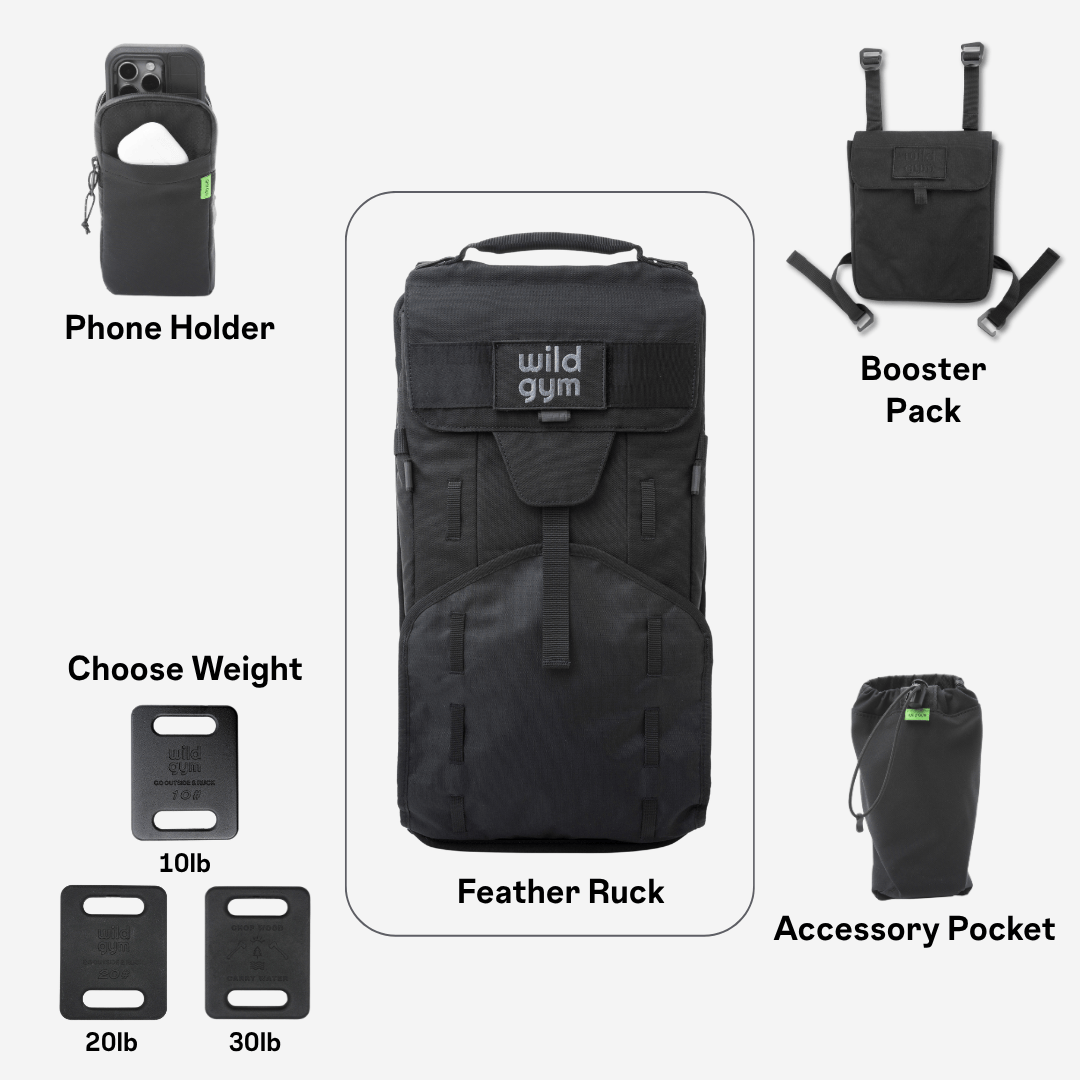
Best pick: Feather Ruck (beginner comfort + stability)
-
Who it’s for: most beginners, daily consistency, smaller frames, anyone who values comfort
-
Why it matters: a stable plate pocket + good fit reduces bounce and shoulder fatigue (which lets you progress safely)
Runner-up: Everyday Ruck (bigger loads + more capacity)
-
Who it’s for: larger bodies, heavier progression, longer Rucks, people who want more storage
-
Why it matters: dual plate pockets + structure helps when you start pushing into heavier territory
The Wild Gym starting rule
Here’s the baseline I want you to tattoo on your brain for the first 2–4 weeks:
-
Most people: start with 10–20 lb
-
Over 150 lb: start with 20 lb
-
Under 150 lb: start with 10 lb
And do that a few times per week, not every day at first.
“Is 10% of bodyweight a good rule?”
It can be a decent upper guardrail for beginners who already walk regularly.
You’ll see reputable fitness orgs use ranges like 10–15% bodyweight for weighted walking protocols (usually treadmill-based).
But here’s the reality:
-
If you’re new to exercise, 10% might be too much
-
If you’re fit and already walking/hiking, 10% might feel perfect
-
If your pack fits poorly, 10% will feel awful
So I prefer this rule:
Start with 10–20 lb, then earn your way up.
Comparison table: what beginners should start with
|
Your starting point |
Start weight |
Frequency |
Session length |
What to progress first |
|
Off-the-couch / inconsistent |
10 lb |
2x/week |
20–30 min |
Posture + consistency |
|
Regular walker (3–5 days/week) |
10–20 lb |
2–3x/week |
30–45 min |
Time/distance |
|
Hiker / strength training background |
20 lb |
2–4x/week |
30–60 min |
Hills or pace |
|
Bigger body / strong legs, but new to loaded walking |
20 lb |
2–3x/week |
20–40 min |
Time, then weight |
Wild Gym’s own starting weight recommendation (10–20 lb) is the anchor here.

How to choose your starting weight in 60 seconds
Use this checklist before your first Ruck:
-
You should be able to breathe and talk (not gasping the whole time).
-
Your posture stays tall (no forward hunch, no shrugging your shoulders).
-
Your stride stays normal (no waddling, no stomping).
-
The weight feels stable (no bouncing, no shifting).
-
You finish thinking: “I could do that again in 48 hours.”
If you fail any of those, go lighter.
The progression rule that keeps you uninjured
Only increase one thing at a time:
-
Time (add 5–10 minutes)
-
Hills (add a little incline)
-
Weight (add 5 lb)
Do not increase two variables in the same week.
This is where beginners blow it:
They add weight and go longer and pick a hilly route… then wonder why their knees are spicy.
A legit 4-week beginner plan
This is the “I want results but I don’t want to get hurt” plan.
Week 1
-
2 Rucks
-
10–20 lb
-
20–30 minutes
-
Flat route
Week 2
-
2–3 Rucks
-
same weight
-
25–40 minutes
Week 3
-
3 Rucks
-
add 5 lb or add 10 minutes (pick one)
-
keep it mostly flat
Week 4
-
3 Rucks
-
same weight as week 3
-
one session can include gentle hills or a slightly faster pace
If you want the simplest possible rule: start with 10–20 lb a few times per week, then add weight and distance as you get stronger.
Red flags that mean you went too heavy
Stop the session and adjust if you get:
-
sharp pain (not muscle fatigue)
-
numbness/tingling in arms or hands
-
low back pain that ramps quickly
-
knee pain that changes your gait
-
neck/trap tightness that makes you shrug the whole time
The fix is usually:
-
lighten the load
-
shorten the session
-
improve pack fit / keep weight higher and tighter
FAQ
Use this text to share information about your product or shipping policies.
Is 20 lb too much for a beginner?
Not for most people. Wild Gym’s baseline is 10–20 lb to start, and specifically 20 lb if you’re over 150 lb.
Is 30 lb too much for a beginner?
Often, yes. Some strong/experienced walkers can start there, but it’s not the move for most people. Earn 30 by stacking a few weeks of consistent, pain-free rucks at 10–20.
Should I increase weight or distance first?
Distance/time first for the first couple weeks. Your joints and connective tissue adapt slower than your lungs.
How often should I ruck as a beginner?
Start with 2–3x/week. Wild Gym’s guidance is “a few times per week,” then build from there.
Can I ruck every day?
You can, but I wouldn’t start there. Build tolerance first. If you want daily movement, do some days as unweighted walks.
What if I’m under 150 lb?
Wild Gym’s guidance is start with 10 lb.
What if I’m over 200 lb?
Start at 20 lb, keep sessions shorter at first, and progress time before weight. Bigger bodyweight already means higher loading per step.
Is “10% of bodyweight” a good target?
It can be a useful cap, and you’ll see 10–15% used in weighted-walking protocols, but it’s not a requirement. If 10% feels like too much, go lighter and build gradually.
How do I know it’s time to add weight?
When you can do your current ruck 2–3 weeks in a row with:
- no pain
- stable posture
solid recovery …then add 5 lb.
What’s the fastest way to get results without getting hurt?
Consistency + progression. Two to four rucks per week, starting 10–20 lb, building time first, then weight.
Featured collection