How Often Should I Ruck?

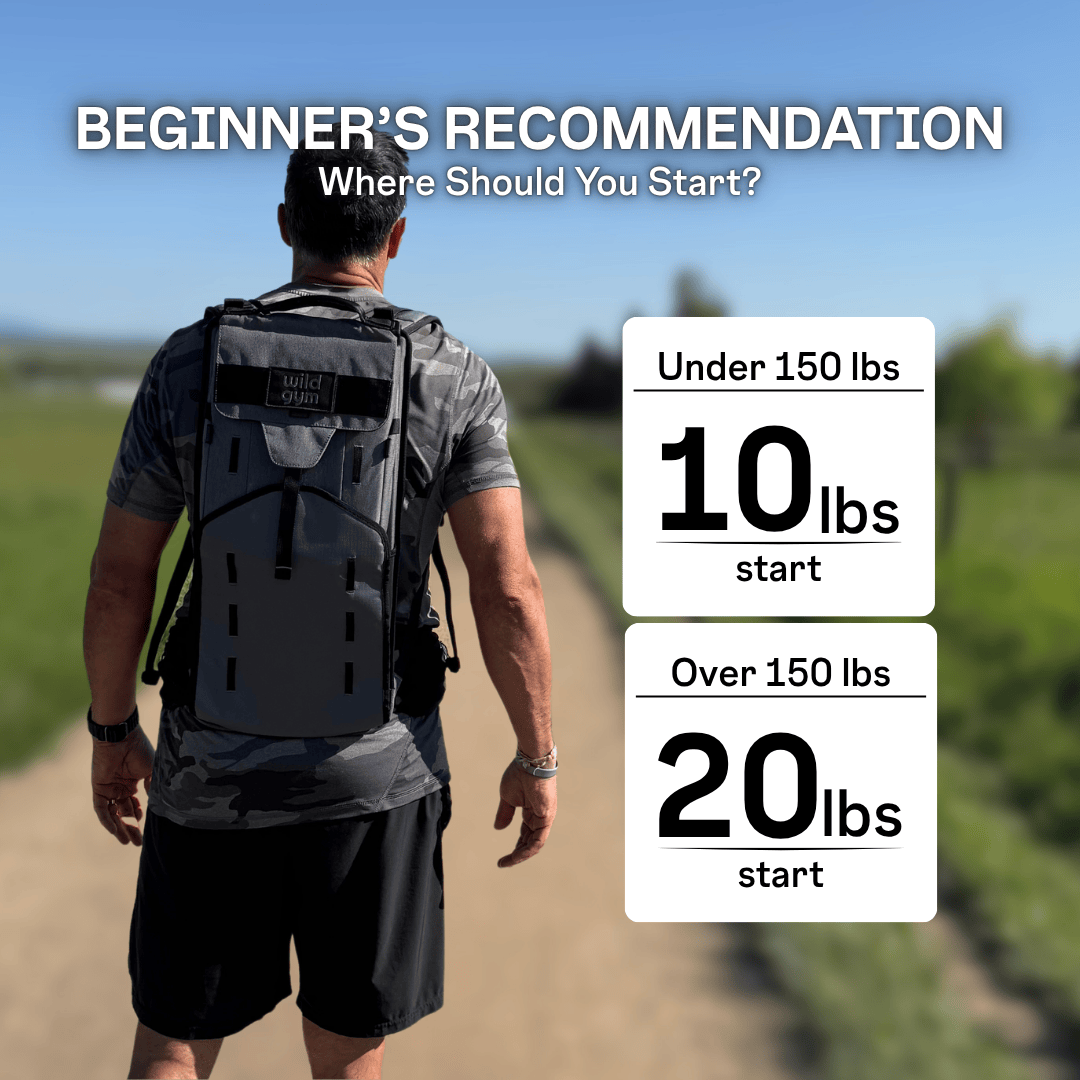
For most people, Rucking 2–4 times per week is the sweet spot. That’s enough to build fitness, strength endurance, posture, and durability without digging a recovery hole. Beginners usually do best starting with 2–3 Rucks per week for 20–45 minutes with 10–20 pounds, then building time before adding more weight. If your goal is fat loss, Zone 2 cardio, hiking fitness, or healthy aging, Rucking can become a regular part of your week—but how often you should Ruck depends on your goal, your current fitness, and how well you recover. The best frequency is the one you can sustain for months, not the one that looks hardest on paper.
The simple answer

If you want the simplest legit answer:
Most people should Ruck 2–4 times per week.
That’s the range where Rucking is:
- frequent enough to drive adaptation
- easy enough to recover from
- realistic enough to become a lifestyle
Could you Ruck every day?
Sure.
Should you?
Not always.
The mistake people make is treating Rucking like a challenge instead of a training practice.
The goal is not to survive a hard week.
The goal is to build a body that can keep doing this for years.
The 3 questions that determine how often you should Ruck
Before I tell you how often to Ruck, you need to answer three questions:
1) What outcome do you want?
Do you want:
- fat loss?
- better cardio?
- stronger legs and posture?
- hiking and adventure fitness?
- healthy aging and longevity?
- a simple habit that gets you outside?
Different goals = different frequency.
2) How trained are you right now?
There’s a big difference between:
- someone coming off the couch
- someone already walking every day
- someone strength training 4x/week
- someone training for mountain hunts or endurance events
3) How well do you recover?
If your feet, calves, knees, and low back are always beat up, your frequency is too high for your current dose.
Best pick + runner up

Best pick for most people: 3 Rucks per week
Who it’s for: most adults who want results without overcomplicating life
Why it works: enough volume to improve fitness, not so much that recovery becomes the main event
This is the Goldilocks plan:
- one shorter easy Ruck
- one moderate Ruck
- one longer Ruck or hillier Ruck
That’s a real training rhythm.
Runner-up: 2 Rucks per week
Who it’s for: beginners, busy parents, people lifting hard already, or anyone rebuilding consistency
Why it works: two quality Rucks per week is infinitely better than the fantasy of five that never happens
Two is enough to create momentum.

Comparison table: how often to Ruck based on your goal
|
Goal |
Best frequency |
Session style |
Notes |
|
General health / longevity |
2–4x/week |
Easy to moderate |
Great for consistency and staying active |
|
Beginner habit building |
2–3x/week |
Short, flat, easy |
Build time before weight |
|
Fat loss |
3–5x/week |
Mostly steady Zone 2 |
Can include easy unweighted walks too |
|
Zone 2 cardio |
3–4x/week |
30–60 min brisk Rucks |
Keep pace sustainable |
|
Hiking / adventure prep |
3x/week |
One long, one moderate, one hill day |
Specificity matters |
|
Strength endurance / heavier Rucking |
2–3x/week |
Moderate to heavy |
Needs more recovery |
|
Already lifting 3–5x/week |
2x/week |
Easy/moderate |
Ruck supports lifting, not competes with it |
|
Recovery / joint-friendly movement |
2–5x/week |
Light load or even unweighted some days |
Keep ego out of it |
Here’s how often different people should Ruck

1) The beginner who’s just trying to get moving
This is the person who says:
“I need something simple I can actually stick to.”
How often?
2–3 times per week
What it looks like
-
20–30 minutes
-
10–20 pounds
-
flat route
-
conversational pace
Why
Your cardio will adapt faster than your feet, calves, and connective tissue.
So the job in month one is not “go hard.”
It’s:
-
build tolerance
-
learn the movement
-
keep recovery clean
-
create a habit
Example week
-
Monday: 20 min easy Ruck
-
Wednesday: 25 min easy Ruck
-
Saturday: 30 min easy Ruck
That’s enough.
2) The busy parent or working professional who wants a practical fitness habit
This is probably a huge chunk of Wild Gym people.
You don’t want a second job disguised as a training plan.
You want something that:
-
fits real life
-
clears your head
-
keeps you strong
-
doesn’t smoke your joints
How often?
3 times per week
What it looks like
-
1 short Ruck
-
1 moderate Ruck
-
1 longer weekend Ruck
Example week
-
Tuesday: 25–30 min brisk Ruck
-
Thursday: 30–40 min moderate Ruck
-
Saturday or Sunday: 45–75 min longer Ruck
Why
This gives you enough volume to actually get fitter, but still leaves room for strength training, work, family, and life.
3) The fat-loss person who wants to burn more calories without running
This person often asks:
“Can Rucking help me lose weight?”
Yes.
Not because it’s magical.
Because it raises the cost of walking without turning cardio into punishment.
How often?
3–5 times per week
What it looks like
Mostly easy-to-moderate Rucks, not death marches.
Example week
- Monday: 30 min easy Ruck
- Tuesday: 40 min brisk Ruck
- Thursday: 30 min easy Ruck
- Saturday: 60 min longer Ruck
- Sunday: optional easy walk or recovery Ruck
Why
Fat loss responds really well to:
- consistent weekly movement
- sustainable cardio
- not getting destroyed and overeating because your training is too intense
For most people, more frequent moderate Rucking beats occasional brutal sessions.
4) The over-40 person who wants longevity, bone loading, and healthy aging
This is one of my favorite use cases for Rucking.
Because a lot of people over 40 are realizing:
- running beats them up
- intense gym training is harder to recover from
- they still need strength, cardio, posture, and durability
How often?
2–4 times per week
What it looks like
- 2–4 steady Rucks
- plus 2–3 strength sessions if possible
Example week
- Monday: 30 min Ruck
- Wednesday: strength
- Thursday: 35–45 min Ruck
- Saturday: strength + short easy Ruck
- Sunday: 60 min outdoor Ruck
Why
This gives you:
- regular weight-bearing activity
- aerobic work
- posture and carry strength
- a routine that doesn’t constantly tax your recovery
If your goal is aging well, consistency beats intensity.
5) The lifter who already strength trains hard
This person says:
“I already lift 4 days a week. How should Rucking fit in?”
You don’t need to Ruck every day.
Rucking should support your lifting, not interfere with it.
How often?
2 times per week
Sometimes 3 if one is very easy.
What it looks like
- one shorter recovery-style Ruck
- one longer Zone 2 Ruck
Example week
- Wednesday: 25–35 min easy Ruck
- Saturday: 45–75 min moderate Ruck
Why
This gives you:
- extra conditioning
- lower-body work capacity
- recovery-friendly cardio
- outdoor movement
Without compromising your barbell work.
6) The hiker, hunter, or adventure athlete
If your real goal is to carry a load in the mountains, Rucking should be more specific.
How often?
3 times per week
What it looks like
- one short easier Ruck
- one hill session
- one long Ruck
Example week
- Tuesday: 30 min moderate Ruck
- Thursday: 30–45 min hill Ruck
- Saturday: 60–120 min longer Ruck
Why
Specificity matters.
If you want to be good at carrying weight over terrain, you need:
- time under load
- some climbing
- some longer efforts
But even here, you don’t need 6 days per week.
7) The person using Rucking for mental health / stress / daily rhythm
This is one people underestimate.
Sometimes Rucking is less about “fitness optimization” and more about:
- clearing your head
- getting sunlight
- walking with purpose
- bookending the day outside
How often?
As often as you want
But I’d think in terms of:
- 2–4 weighted Rucks/week
- plus extra walks as desired
Example week
- weighted Rucks on Mon/Wed/Fri
- easy unweighted walks on the other days
Why
Not every outside session needs load.
That’s how you keep it sustainable.
The mistake: confusing “can” with “should”
Can you Ruck every day?
Yes.
But daily Rucking only makes sense if:
- the load is appropriate
- some sessions are very easy
- your joints feel good
- your recovery stays clean
If you Ruck every day and:
- your feet hurt
- your knees are cranky
- your calves are always smoked
- your posture falls apart
- your enthusiasm drops
…you’re doing too much for where you are right now.
The weekly templates I’d actually recommend

Option 1: The simplest effective plan
Ruck 3x/week
- 1 short
- 1 medium
- 1 long
This is my favorite template for most adults.
Option 2: The beginner plan
Ruck 2–3x/week
- all easy
- all flat
- all short enough that recovery is easy
Do this for 4 weeks before you get cute.
Option 3: The fat-loss / cardio plan
Ruck 4x/week
- 3 moderate steady sessions
- 1 longer session
You can also mix in unweighted walks on off days.
Option 4: The “I already lift” plan
Ruck 2x/week
- 1 recovery/easy session
- 1 longer Zone 2 session
This is enough.
How to know you’re Rucking too often
These are the signs:
- your calves, feet, or shins are always tight
- knee pain is creeping up
- your pace is getting slower because you’re smoked
- you dread sessions
- your lifting performance is dropping
- you’re not recovering between Rucks
If that’s happening, reduce one of these:
- frequency
- weight
- terrain difficulty
- session length
Usually frequency and terrain are the first levers I’d pull.
How to know you could Ruck more often
These are the signs you can add a little more:
- you recover well within 24 hours
- your pace is steady or improving
- no recurring joint pain
- the current plan feels almost too easy
- you’re finishing sessions with plenty in the tank
Then add:
-
one extra short Ruck
or - one extra 10–15 minutes to a current session
Not both at once.
The progression rule
This matters more than frequency.
If you’re going to increase training load, change only one variable at a time:
- frequency
- duration
- hills
- weight
Not two or three.
That’s how you keep Rucking as a longevity tool instead of turning it into an injury hobby.
Final thought
The best answer to “How often should I Ruck?” is not:
“Every day.”
It’s:
Often enough to get better. Not so often that it breaks the habit.
For most people, that means:
- 2–3x/week to start
- 3x/week as the sweet spot
- 4–5x/week only if recovery and goals justify it
Rucking is not supposed to be complicated.
Walk with weight.
Recover well.
Do it again.
That’s how it works.
FAQ
Use this text to share information about your product or shipping policies.
How often should a beginner ruck?
2–3 times per week is perfect for most beginners.
Is rucking every day too much?
Not always, but for most people daily weighted rucking is more than necessary. A better setup is a few weighted rucks per week plus extra walks.
How often should I ruck for fat loss?
Usually 3–5 times per week, mostly at a sustainable pace.
How often should I ruck if I already lift weights?
2 times per week is a great starting point.
How often should I ruck for Zone 2 cardio?
3–4 times per week works really well, depending on your overall training.
How often should I ruck for hiking prep?
3 times per week is usually enough if one session is longer and one includes hills.
Can I ruck on back-to-back days?
Yes, but early on I’d avoid it unless one session is very easy.
What’s the minimum effective dose?
2 good rucks per week is enough to start seeing real benefit.
What’s the sweet spot for most people?
3 times per week.
What matters more: frequency or weight?
Consistency and total training load matter more than chasing heavy weight. A lighter ruck done consistently beats a heavy ruck done randomly.
Featured collection