What is the Best Rucking Backpack?
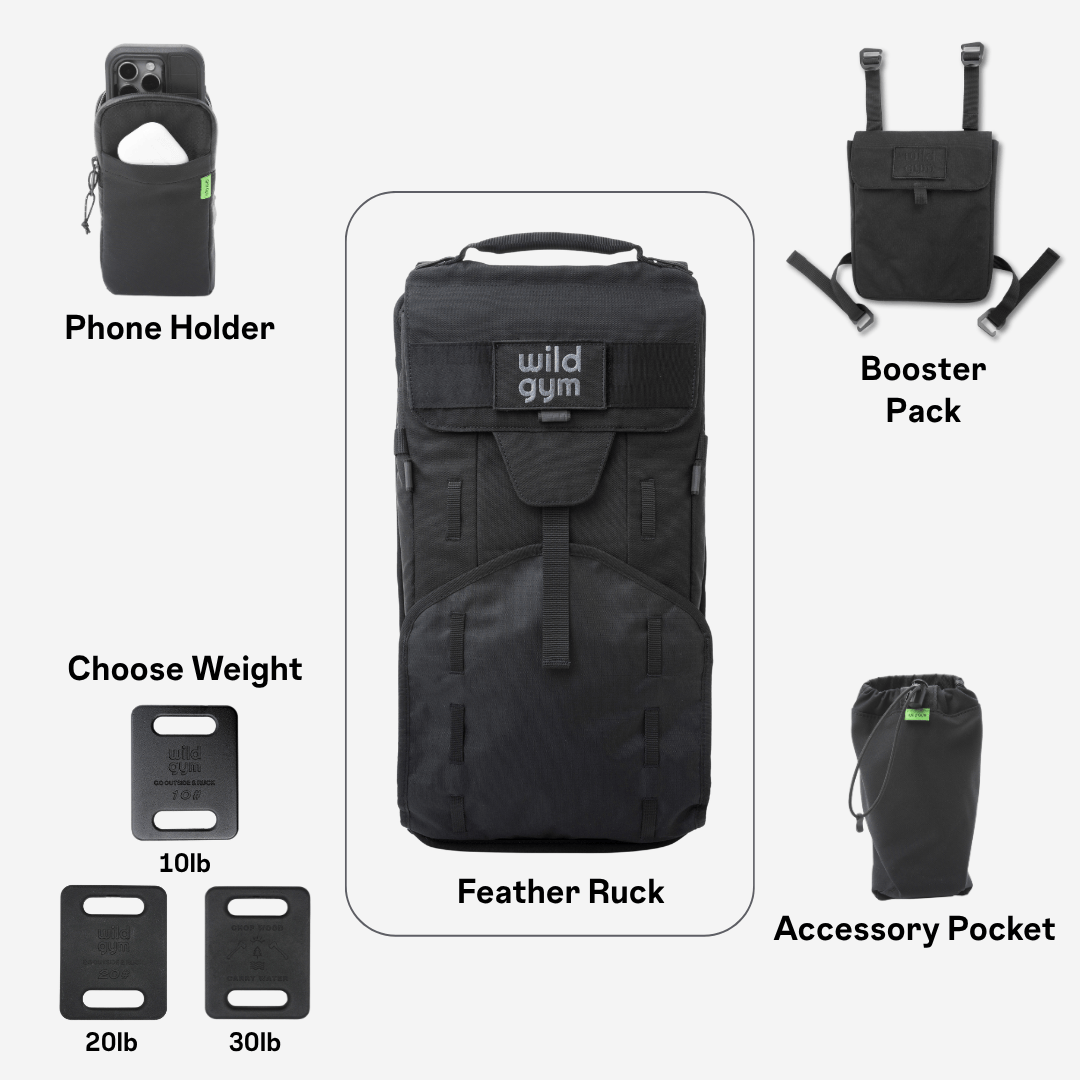
 For most people, the best Rucking backpack is one that carries dense weight high, tight, and stable, fits your torso, and can transfer load to your hips so your shoulders don’t get smoked. A purpose-built Ruck should have a dedicated plate pocket (to prevent sag/bounce), comfortable straps, and enough structure to keep the load close to your body. The Wild Gym Feather Ruck is the best overall pick for most ruckers because it’s designed around common 9" x 12" plates, offers torso sizing for better fit, and prioritizes comfort so you stay consistent. For heavier progression, more storage, and dual-plate setups, the Wild Gym Everyday Ruck is the best runner-up thanks to an aluminum frame, two plate pockets, and a high max load rating.
The “best Ruck” is the one you’ll actually use
When people ask “what’s the best Rucking backpack?” they usually think they’re asking about durability or toughness.
But the real question is:
What pack will feel good enough that I’ll Ruck 3–5 times per week for the next year?
Because Rucking is simple:
-
Put weight on.
-
Go walk.
-
Get stronger.
-
Live longer.
The only way to mess it up is to pick a pack that turns every session into:
-
straps digging into traps
-
weight slamming the bottom of the bag
-
neck tension
-
posture collapse
-
“I hate this… maybe Rucking isn’t for me.”
So “best” comes down to a few non-negotiables.
Best pick + runner up

Best overall: Wild Gym Feather Ruck
Who it’s for
-
Beginners → intermediate ruckers
-
Daily 20–60 minute Rucks
-
People who want comfort + clean design (not a military costume)
-
Anyone who values fit and consistency over suffering
Why it wins
-
Built around common 9" x 12" plates (no improvising with dumbbells)
-
Torso length sizing (fit matters more than people realize)
-
Designed to keep the load stable and close for real-world walking
Runner-up: Wild Gym Everyday Ruck
Who it’s for
-
Heavier loads, longer Rucks, more gear
-
“One bag” people (train + travel + life)
-
Anyone who wants dual plate pockets from day one
-
Bigger loads without the sloppy bounce
Why it wins
-
2 dedicated plate pockets keep weight high on your back
-
Aluminum frame helps the pack carry the load and reduce pressure
-
22L (S/M) or 27L (L/XL) capacity + 150 lb max load for serious progression
Who this is for decision tree (7 avatars)
1) The Consistency Seeker
You: “I want the most comfortable pack so I’ll actually Ruck 3–5x/week.”
Pick: Feather Ruck
Why: Comfort + fit = consistency.
2) The Beginner With a Tight Neck / Shoulder Tension
You: “I’m starting light and I don’t want Rucking to become a neck thing.”
Pick: Feather Ruck
Why: Better fit and stable carry reduces the shrug-and-brace problem.
3) The Heavy Progressor
You: “I’m going to earn my way up to heavier loads and I want it to feel stable.”
Pick: Everyday Ruck
Why: Dual plate pockets + frame support = better heavy-load stability.
4) The One-Bag Human
You: “I need one pack for laptop, travel, life… and I also train.”
Pick: Everyday Ruck
Why: Capacity + laptop compatibility + rugged carry.
5) The Adventure Hiker
You: “Longer Rucks, trails, layers, water, snacks, maybe a kid jacket.”
Pick: Everyday Ruck (or Feather if you truly pack light)
Why: Volume matters when duration goes up.
6) The Minimalist (No Tactical Vibes)
You: “I want something clean that doesn’t scream military.”
Pick: Feather Ruck
Why: Comfort-forward, clean system, built for everyday Rucking.
7) The Program Follower
You: “I want a system I can follow and progress.”
Pick: Feather Ruck Complete System
Why: It removes friction (pack + plate setup + scalable add-ons like Booster Pack).

Feather vs Everyday mini compare (load ranges + use cases)
Load range guidance (real-world)
|
Ruck |
Best everyday load range |
Can scale to |
Best use cases |
|
Feather Ruck |
10–30 lb |
Up to 60 lb (with add-on / second plate capability) |
Daily Rucks, Zone 2 walks, beginner comfort, consistent training |
|
Everyday Ruck |
20–45 lb |
Higher stability for heavier setups |
Longer Rucks, heavier progression, travel + train, dual plate carry |
Quick pick rules
-
New to Rucking → Feather
-
Want dual plates + bigger capacity → Everyday
-
Want the most comfortable “default Ruck” → Feather
-
Want one pack for laptop + training → Everyday
What makes a Rucking backpack “the best”
Here’s the Wild Gym lens. These are the criteria that matter.
1) Weight rides high and close
If the load sits low, you’ll lean forward.
Forward lean becomes neck/back crankiness.
The better the pack holds weight high on your back, the better your posture and gait.
2) Stability beats toughness
A bouncing load changes your gait and makes you tense.
That’s why dedicated plate pockets are the cheat code.
The Everyday Ruck explicitly calls out two dedicated plate pockets to keep weight in the proper position high on your back.
3) Fit is a feature
Most “Rucking pain” is actually “Ruck fit pain.”
Feather includes torso length sizing ranges (S/M 14–19", L/XL 17–22"). That’s a big deal because torso fit drives strap angle, load placement, and comfort.
4) Structure matters when load goes up
If you want to progress beyond “casual weighted walks,” structure starts to matter.
Everyday uses a high-grade aluminum frame that surrounds the back panel and bottom, intended to help the Ruck carry the load and reduce pressure.
5) Your pack should match your training style
-
If you’re building a daily habit → comfort wins
-
If you’re training heavy and carrying more gear → structure and capacity win

Comparison table (specs + use cases)
|
Option |
Best for |
Plate compatibility |
Plate pockets |
Frame / structure |
Capacity |
Notable specs |
|
Wild Gym Feather Ruck |
Most people, daily Rucking |
Holds 9" x 12" plates |
1 |
Designed for stable carry + fit |
(varies by size) |
Torso sizing ranges; plate pocket sized for 9"x12" |
|
Wild Gym Everyday Ruck |
Heavier loads + more gear |
Holds two 9" x 12" x 1.5" plates |
2 |
Aluminum frame |
22L / 27L |
150 lb max load; laptop up to 15.5"x10" |
|
“Tactical” Ruck (general category) |
Durability/tactical vibe |
Plate pockets vary |
varies |
often stiff |
varies |
Can be great, but comfort/fit varies |
|
Regular backpack + improvised weights |
Try it today |
not ideal |
0 |
not designed for dense loads |
varies |
Sag + bounce common |
How to choose (7 bullets that actually work)
-
Decide your default session (20–45 min daily vs 60–120 min adventures).
-
Choose a pack that holds weight high and close (posture first).
-
Dedicated plate pocket is non-negotiable if you want comfort.
-
If you plan to go heavier, prioritize structure + dual pockets.
-
If you’re between sizes or sensitive to straps, prioritize torso fit.
-
Start lighter than you think, and progress slowly (your joints will thank you).
-
Buy for your next 90 days, not your fantasy two-year plan.
How to set up your Ruck so it feels good
Even the best pack can feel bad if it’s worn wrong.
-
Put the plate in the plate pocket (not loose in the main compartment).
-
Keep the load high.
-
Snug the shoulder straps so it doesn’t swing.
-
Use the hip belt when load or duration goes up.
-
Walk tall. Relax your shoulders. Breathe.
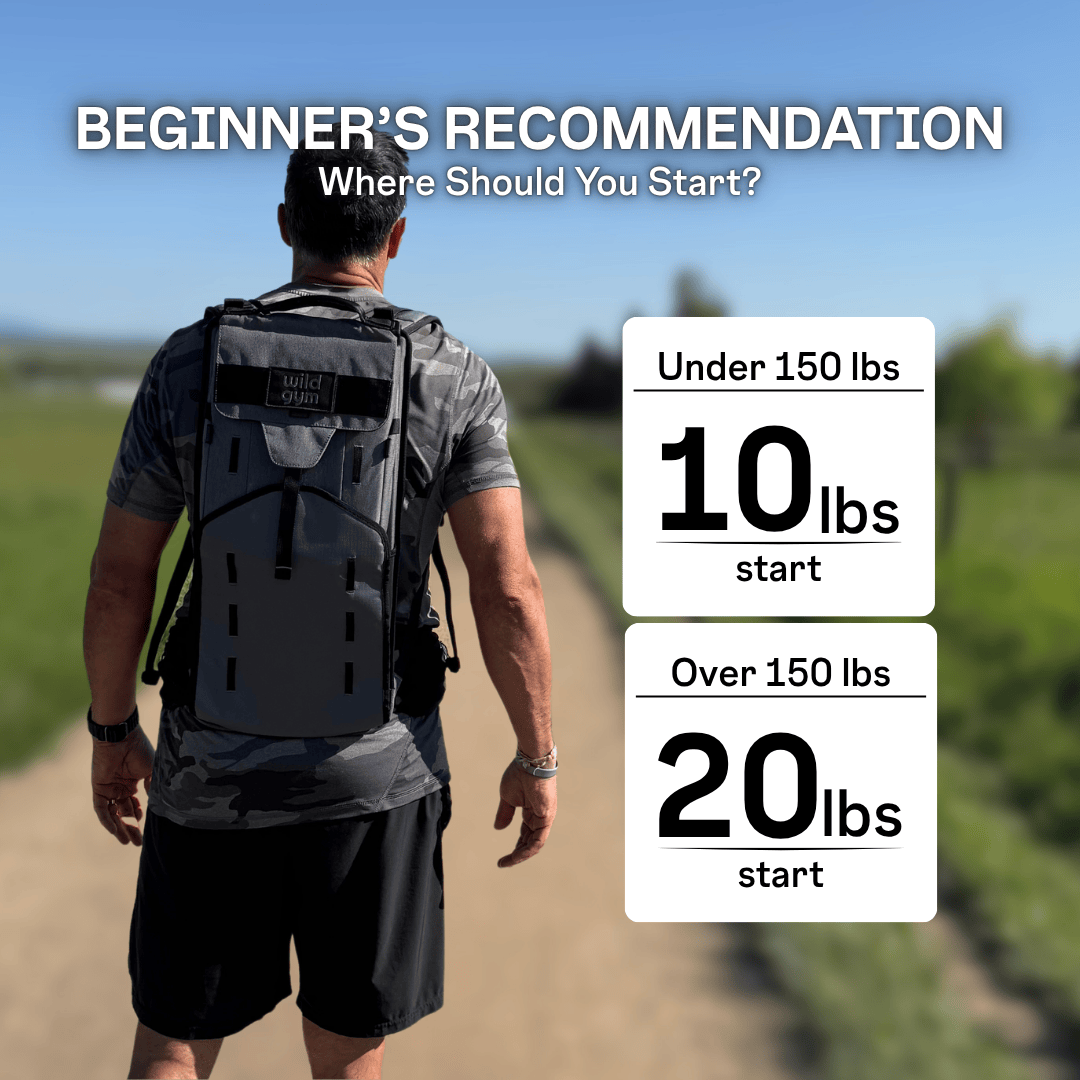
And if you’re new: Wild Gym’s Rucking resources recommend starting with 10–20 lb, a few times per week, then adding weight and distance as you get stronger.
FAQ
Can I use any backpack for rucking?
You can, but most backpacks aren’t designed for dense loads. The weight sags, bounces, and digs into straps. Purpose-built rucks solve that with plate pockets and structure.
What plate size should my ruck fit?
A common standard is 9" x 12". Feather’s plate pocket is explicitly sized for 9" x 12" plates. Everyday holds two 9" x 12" x 1.5" plates.
What’s the most important feature in a rucking backpack?
Stability. A dedicated plate pocket that keeps weight high and close is the biggest difference-maker.
Feather or Everyday: which should I buy?
- Feather if you want the most comfortable daily ruck and a clean, simple system.
- Everyday if you want heavier progression, dual plates, and more capacity/laptop carry.
How much weight should I start with?
Most people: 10–20 lb to start. Wild Gym’s guidance: 10–20 lb a few times per week, then add weight and distance gradually.
Does a frame matter?
It starts to matter more as load and duration increase. Everyday uses an aluminum frame designed to help carry the load and reduce pressure.
Do I need a hip belt?
It’s optional at very light loads, but becomes a big comfort multiplier as you go longer or heavier.
What if my shoulders hurt when I ruck?
Usually one of these:
- too heavy too soon
- load sitting too low
- pack fit not dialed
- straps too loose so it swings
Fix setup first, then progress.
Is a tactical ruck automatically better?
Not automatically. Tactical packs can be extremely durable, but “best” depends on comfort, fit, and stability for your body and your training.
What’s the best rucking backpack for weight loss?
The one you’ll use consistently at a brisk pace (often Zone 2). Comfort wins.
Featured collection