Rucking for Weight Loss: Does It Actually Work?

Yes—Rucking works extremely well for weight loss. Not because it burns the most calories per minute, but because it’s sustainable, low impact, and easy to do consistently. Walking with weight in a Ruck increases calorie burn, builds strength, and improves aerobic fitness without beating up your joints. Most people can Ruck more often and for longer than they can run, which leads to better long-term fat loss results. If you’ve struggled with intense workouts, injuries, or inconsistency, Rucking is one of the most effective ways to lose weight and keep it off.

First: Why Most People Struggle With Weight Loss
Most people don’t fail at weight loss because they’re lazy.
They fail because they pick things that are:
- Too Intense
- Too Complicated
- Too Hard To Recover From
- Too Hard To Stick With
They try to go from zero to:
- running 5 days a week
- crushing HIIT workouts
- eating perfectly
And it works… for about 2–3 weeks.
Then:
- they get injured
- they burn out
- they lose motivation
And they’re back where they started.
Rucking Solves a Different Problem
Rucking isn’t about doing more.
It’s about doing something you can actually sustain.
It sits in a very specific sweet spot:
- Harder Than Walking
- Easier Than Running
- Stronger Than Both
That combination is what makes it so powerful for weight loss.
How Rucking Actually Helps You Lose Weight

Let’s break this down in a way that actually matters.
1. You Burn More Calories Than Walking (Without Feeling Crushed)
When you add weight, your body has to work harder.
That means:
- Higher Heart Rate
- More Muscle Recruitment
- More Energy Used Per Step
But unlike running, it doesn’t feel like a fight.
You can still:
- Breathe Through Your Nose
- Hold A Conversation
- Go Longer
That’s a big deal.
2. You Can Do It More Often
This is the real advantage.
Most people can’t:
- run 5 days a week
- do intense workouts every day
But they can:
- Ruck 3–5 Times Per Week
- Walk For 30–60 Minutes
- Recover Easily And Do It Again Tomorrow
Weight loss is about consistency.
And Rucking makes consistency realistic.
3. You Build Muscle While Burning Fat
Rucking is not just cardio.
It’s loaded movement.
That means you’re training:
- Legs
- Glutes
- Core
- Upper Back
Over time, this helps:
- Maintain Muscle
- Improve Body Composition
- Increase Overall Energy Output
You’re not just getting lighter.
You’re getting stronger.
4. It Keeps You in the Right Zone
Most people train too hard.
They live in that:
- out-of-breath
- high stress
- high fatigue
zone.
Rucking naturally puts you in:
Zone 2 cardio
This is where:
- Fat Metabolism Improves
- Aerobic Base Builds
- Stress Stays Manageable
It’s not flashy.
But it works.
5. It Fits Into Real Life
This is where everything clicks.
Rucking isn’t a “workout” in the traditional sense.
It’s something you can layer into your day:
- Morning Walk
- Evening Reset
- Time With Your Kids
- Walking The Dog
- Listening To A Podcast
That’s how habits stick.
What Makes Rucking Work When Everything Else Hasn’t
If you’ve struggled with weight loss before, it’s usually not because you didn’t try hard enough.
It’s because the approach didn’t fit your life.
Rucking works because:
- It Doesn’t Beat You Up
- It Doesn’t Require Motivation Every Day
- It Doesn’t Require A Gym
- It Doesn’t Require Perfection
You can show up at:
- 60% energy
- 70% motivation
and still get it done.
That’s everything.
What Results Can You Expect?

If you Ruck consistently for 8–12 weeks, you’ll likely notice:
- Improved Body Composition
- Better Energy Levels
- Stronger Legs And Posture
- More Daily Movement Without Burnout
- Gradual, Sustainable Fat Loss
Not overnight.
But reliably.
A Simple Rucking Plan for Weight Loss
You don’t need a complicated system.
Start here:
Week 1–2
- 10–15 Lb
- 20–30 Minutes
- 3x Per Week
Week 3–6
- 15–20 Lb
- 30–45 Minutes
- 3–4x Per Week
Week 7–12
- 20–30 Lb
- 40–60 Minutes
- 4–5x Per Week
Keep the pace:
- Steady
- Conversational
- Sustainable
Common Mistakes to Avoid
- Starting Too Heavy
- Trying To Turn It Into A HIIT Workout
- Inconsistency
- Expecting Immediate Results
Rucking works best when you treat it like a long game.
Who Rucking Is Perfect For
Rucking is especially powerful if you:
- Don’t Like Running
- Have Joint Issues Or Old Injuries
- Are Getting Back Into Fitness
- Have Failed With Intense Programs Before
- Want Something Simple And Repeatable
The Truth About Weight Loss
There’s no magic exercise.
But there is a better approach.
The best fat loss strategy is:
Something you can do consistently for months and years.
Rucking checks that box better than almost anything else.
Final Thought
If everything you’ve tried before has felt like:
- punishment
- all-or-nothing
- unsustainable
Rucking is a different path.
It’s simple.
It’s effective.
And it meets you where you are.

Throw some weight in a Ruck.
Go outside.
Walk.
Do it again tomorrow.
That’s how this works.
FAQ
Use this text to share information about your product or shipping policies.
What is rucking in one sentence?
Rucking is walking a set time or distance while carrying weight in a backpack.
Is rucking just hiking?
It’s related. Hiking is usually trails, terrain, and gear. Rucking is defined by the added weight, and it can be done anywhere, sidewalks included.
Do I need a special rucking backpack?
No. You can start with any backpack. But if you want it to be comfortable and scalable, a ruck with stable weight placement is a game-changer.
How much weight should I start with?
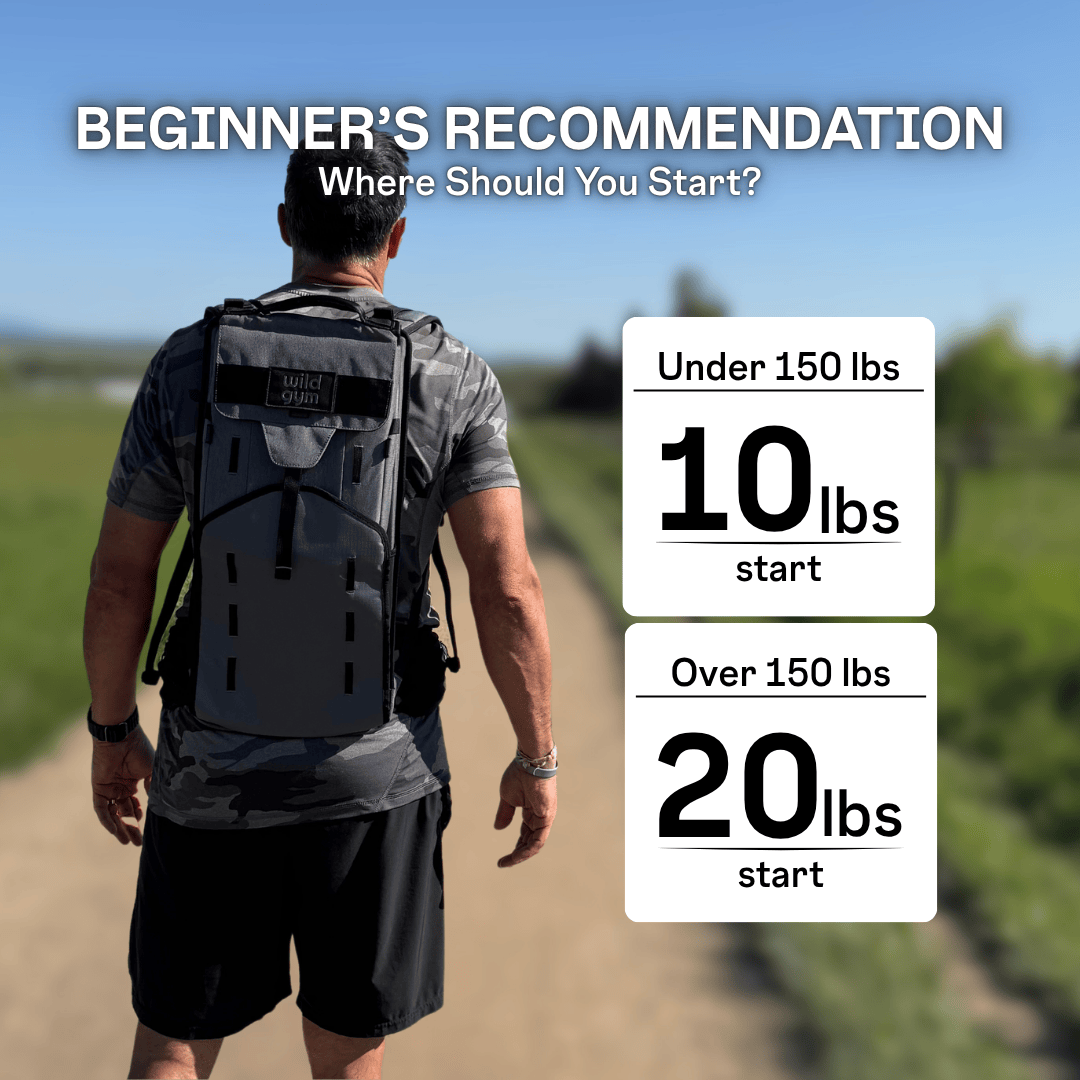
Wild Gym recommends 10–20 lb, with a simple rule: over 150 lb start at 20; under 150 start at 10.
How often should beginners ruck?
Start “a few times per week.” Wild Gym suggests starting with rucking a few times per week and building from there.
How long should a beginner ruck be?
Start with 20–30 minutes. Add time before you add a bunch of weight.
What pace should I ruck?
Brisk but controlled. You should be able to speak in sentences. If you’re redlining, it’s too heavy or too fast.
Does rucking build muscle?
It builds strength endurance and “carry strength.” If you want more muscle and bone stimulus, pair rucking with 2–3 simple strength sessions per week.
Is rucking safe for knees?
For many people it’s lower impact than running, but it’s not immune to overuse if you ramp too fast. Start light, keep the load stable, and avoid steep hills early.
What’s the best way to start if I’m totally out of shape?
Start with walking first. WebMD suggests you should be able to walk about 30 minutes comfortably before adding load. Then add 10 pounds and keep it short.
Featured collection