Rucking Benefits: What Happens to Your Body When You Ruck

Rucking—walking with weight in a Ruck—creates a unique training effect by combining low-impact cardio with load-bearing strength. When done consistently (2–5x/week with 10–30 lb), it can improve cardiovascular fitness, leg strength, posture, bone density, and metabolic health while being easier to recover from than running. The key difference is mechanical loading without high impact: your heart works harder than a normal walk, your muscles and bones experience meaningful stress, and your body adapts without the same joint strain as higher-impact exercise. For most adults, Rucking is one of the simplest ways to build durability, consistency, and long-term fitness.
First: Why Rucking Works (And Why It Feels Different)
There’s a reason Rucking feels… different.
Not harder in a chaotic, exhausting way.
Harder in a steady, controlled, “I could do this for a long time” way.
That’s because Rucking lives in a very specific lane:
- Harder Than Walking
- Easier To Recover From Than Running
- More Muscular Than Both
You’re not just moving.
You’re moving under load.
That changes everything.
What Actually Happens in Your Body When You Ruck

Let’s break this down the right way—mechanically and physiologically.
1. Your Heart Works Harder (Without You Noticing As Much)
When you add weight, your body has to produce more force with every step.
That means:
- Higher Oxygen Demand
- Higher Heart Rate
- Higher Caloric Burn
But here’s the key:
You usually stay in Zone 2 cardio—that sustainable, conversational pace that builds your aerobic base.
This is the zone most people should spend more time in, but don’t.
Rucking naturally puts you there.
Translation:
You get meaningful cardiovascular training without feeling wrecked.
2. Your Muscles Work Differently Than Walking Or Running
Walking is mostly passive.
Running is elastic and impact-driven.
Rucking is load-driven.
That means your muscles—especially your:
- Glutes
- Quads
- Calves
- Upper Back
- Core
have to actively stabilize and produce force over and over again.
You’re essentially doing:
Hundreds to thousands of low-level, loaded reps
That builds something most people lack:
Strength Endurance
Not max strength.
Not sprint speed.
But the ability to keep producing force for a long time.
That’s real-world fitness.
3. Your Bones Get A Signal To Stay Strong
One of the most underrated benefits of Rucking is what it does for your skeleton.
Your bones respond to mechanical loading.
Not just impact—but consistent, repeatable force through the body.
Rucking provides:
- Vertical Loading (Weight Pressing Down Through Your Body)
- Ground Reaction Forces (From Walking)
This combination creates a stimulus that helps support:
- Bone Density
- Joint Integrity
- Long-Term Structural Strength
Especially important as you age.
4. Your Posture Improves (If You Do It Right)
A properly loaded Ruck sits:
- High
- Tight
- Close To Your Body
That encourages you to:
- Stand Taller
- Stabilize Your Trunk
- Engage Your Upper Back
Over time, this can help counteract:
- Desk Posture
- Forward Rounding
- Weak Upper Back Muscles
You’re essentially getting postural training for free while you walk.
5. You Burn More Calories Without Needing Intensity
People obsess over calorie burn.
But the real question is:
“What can I do consistently without blowing myself up?”
Rucking increases energy expenditure because:
- You’re Moving Bodyweight Plus External Load
- Your Muscles Are Working More
- Your Heart Rate Is Elevated
And because it’s sustainable, you can:
- Go Longer
- Go More Often
- Stack Sessions
That’s where the real fat-loss benefit comes from.
6. Your Joints Take Less Beating Than Running
Running isn’t bad.
But it is high impact.
Rucking gives you:
- Meaningful Load
- Without Repetitive Pounding
That’s why it works so well for:
- People Over 40
- People With Past Injuries
- People Carrying Extra Weight
You still get a training effect.
You just don’t pay the same recovery cost.
7. You Build “Carry Capacity” (This One Matters More Than You Think)
There’s a difference between:
- Looking Fit
- Being Capable
Rucking builds what I call:
Carry Capacity
The ability to:
- Carry Your Kid
- Carry Groceries
- Hike With A Pack
- Move Through The World With Strength
It’s one of the most practical forms of fitness there is.
And it’s one most people completely ignore.
The Hidden Benefit: It Makes You More Consistent

This is the real unlock.
Rucking is:
- Simple
- Repeatable
- Low Friction
- Outdoors
Which means you’re more likely to:
- Do It Regularly
- Build A Routine
- Stack Weeks And Months Of Training
Consistency beats intensity.
Every time.
Who Rucking Works Best For
Rucking is especially powerful if you:
1. Don’t Love Running
You still want cardio.
You just don’t want the impact.
2. Are Over 35–40
Recovery matters more.
Joint health matters more.
3. Want Fat Loss Without Burnout
You need something you can do often.
4. Want To Feel Strong Again
Not just “fit”
But capable.
What Results Should You Expect?
If you Ruck consistently for 8–12 weeks:
You’ll likely notice:
- Better Aerobic Fitness
- Stronger Legs
- Improved Posture
- More Energy
- Better Body Composition
- More Resilience To Longer Efforts
Not because Rucking is magic.
Because it’s something you can actually stick with.
How To Start (The Right Way)
Keep this simple.
Start Here:
- 10–20 Lb
- 20–40 Minutes
- 2–3x Per Week
Then Progress:
- Increase Time First
- Then Terrain
- Then Weight
Most people end up in the range of:
- 20–30 Lb
- 30–60 Minute Sessions
That’s the sweet spot.
The Big Picture
There’s a lot of noise in fitness right now.
Cold plunges.
Supplements.
Complicated programs.
Most of it misses something obvious:
Humans are built to move and carry things.
Rucking brings you back to that.
It’s not extreme.
It’s not flashy.
But it works.
Final Thought
If you’re looking for a training method that:
- Builds Strength
- Improves Cardio
- Supports Longevity
- Doesn’t Wreck Your Joints
- Actually Fits Into Your Life
Rucking is one of the best tools you can use.
Not because it’s trendy.
Because it’s simple, effective, and repeatable.

Throw some weight in a Ruck.
Go outside.
Walk.
Do that consistently, and your body will change in all the ways that matter.
FAQ
Use this text to share information about your product or shipping policies.
What is rucking in one sentence?
Rucking is walking a set time or distance while carrying weight in a backpack.
Is rucking just hiking?
It’s related. Hiking is usually trails, terrain, and gear. Rucking is defined by the added weight, and it can be done anywhere, sidewalks included.
Do I need a special rucking backpack?
No. You can start with any backpack. But if you want it to be comfortable and scalable, a ruck with stable weight placement is a game-changer.
How much weight should I start with?
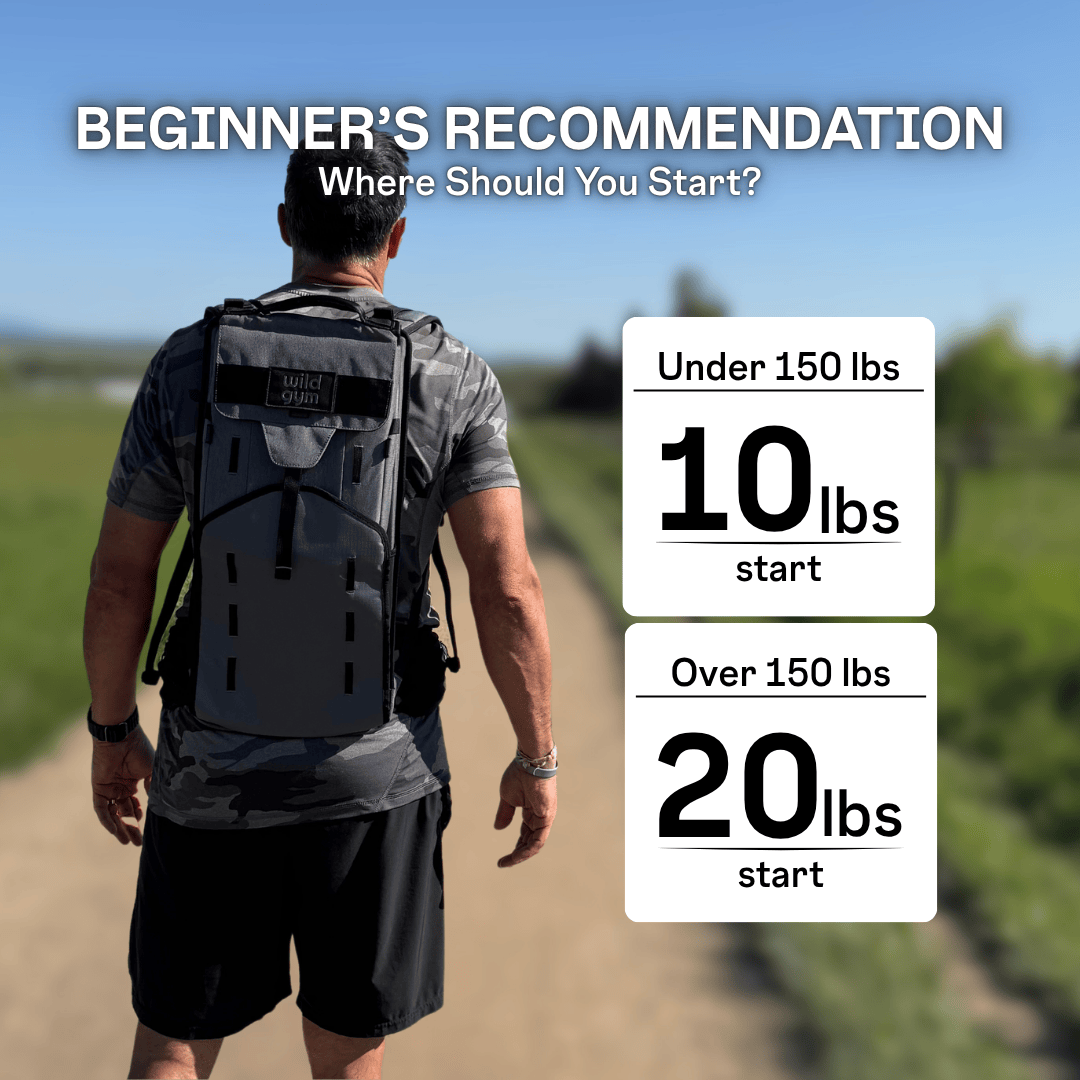
Wild Gym recommends 10–20 lb, with a simple rule: over 150 lb start at 20; under 150 start at 10.
How often should beginners ruck?
Start “a few times per week.” Wild Gym suggests starting with rucking a few times per week and building from there.
How long should a beginner ruck be?
Start with 20–30 minutes. Add time before you add a bunch of weight.
What pace should I ruck?
Brisk but controlled. You should be able to speak in sentences. If you’re redlining, it’s too heavy or too fast.
Does rucking build muscle?
It builds strength endurance and “carry strength.” If you want more muscle and bone stimulus, pair rucking with 2–3 simple strength sessions per week.
Is rucking safe for knees?
For many people it’s lower impact than running, but it’s not immune to overuse if you ramp too fast. Start light, keep the load stable, and avoid steep hills early.
What’s the best way to start if I’m totally out of shape?
Start with walking first. WebMD suggests you should be able to walk about 30 minutes comfortably before adding load. Then add 10 pounds and keep it short.
Featured collection