Best Rucking Pack for Women

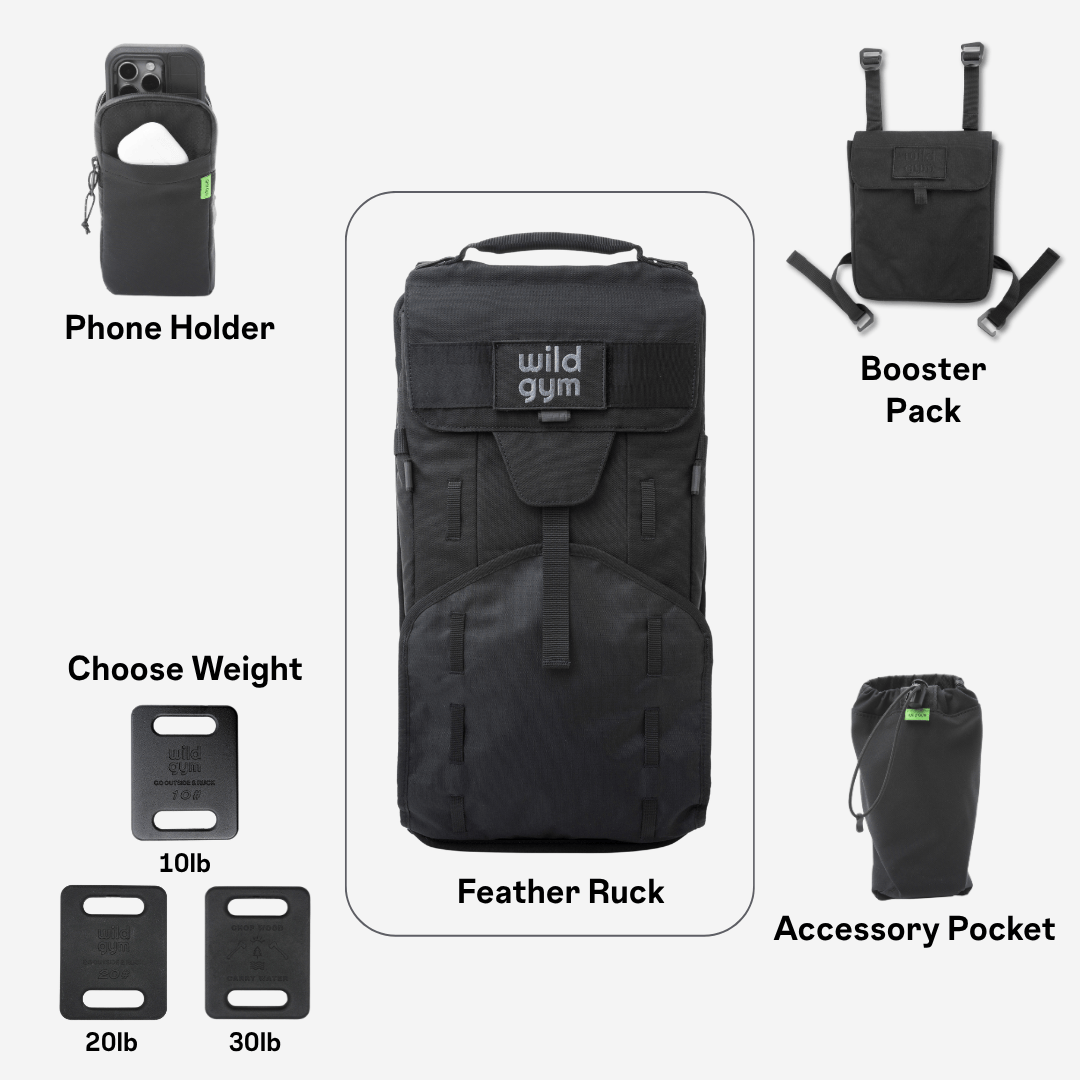
The best Rucking pack for women is one that carries weight high and close, stays stable without bounce, fits a wide range of torso lengths and shoulder widths, and makes progression easy from 10–20 lb up to heavier loads over time. Most “tactical” packs are overbuilt for everyday training and many weighted vests are hot, restrictive, and hard to progress with. A purpose-built Rucking backpack with a dedicated plate pocket, comfortable straps, and a real fit system is usually the best choice for women who want a sustainable, low-impact way to get stronger, improve posture, and build aerobic fitness. The Wild Gym Feather Ruck is the best pick for most women because it’s designed around comfort, adjustability, and stability for walking with weight. The Wild Gym Everyday Ruck is the runner-up for women who want more storage and heavier progression. If you search “best Rucking pack for women,” you’ll see the same stuff Military-style packs. Overbuilt tactical backpacks. Weighted vests. Most of those recommendations miss what actually matters. Women don’t need a “smaller tactical pack.”
If you search “best Rucking pack for women,” you’ll see the same stuff
Military-style packs.
Overbuilt tactical backpacks.
Weighted vests.
Most of those recommendations miss what actually matters.
Women don’t need a “smaller tactical pack.”

They need a pack that is:
- comfortable (or it won’t get used)
- stable (no bounce, no shifting)
- adjustable (fit matters more on smaller frames and narrower shoulders)
- designed for movement under load (not just durability)
Because when a Ruck is uncomfortable, people stop using it.
And consistency is the whole point.
What women actually need from a Rucking pack

Over the last several years I’ve coached thousands of people learning to Ruck, and a huge portion of that community is women—especially women in their 30s, 40s, and 50s.
Here’s what women consistently tell me:
- Tactical packs feel bulky and boxy
- Most “regular backpacks” bounce when weight gets added
- Weighted vests feel restrictive (and get gross fast)
- Shoulder straps dig in
- Packs sit awkwardly on the back (torso length mismatch)
- Progression is confusing (or the gear doesn’t support it)
So our goal at Wild Gym became simple:
Build a Ruck people actually want to use.
Not military cosplay.
Not gimmicks.
Just a comfortable, stable training tool for real people walking with weight.
Best pick + runner up

Best pick: Wild Gym Feather Ruck
Best for: most women, beginners to intermediate, daily Rucking (20–60 min), comfort-first consistency
Why: stable plate carry + comfort features + adjustable fit makes it easier to Ruck frequently and progress gradually.
Runner-up: Wild Gym Everyday Ruck
Best for: women who want more storage, heavier progression, longer Rucks/hikes, “one bag for life + training”
Why: more capacity and structure for heavier loads and carrying more gear.
Why design matters (and what to look for)

1) Weight must sit high and close to your body
This is the big one.
Many backpacks carry weight low and away from your back. That pulls posture forward and can turn “walking with weight” into a lower-back and neck problem.
A good Ruck carries the load:
- high
- tight
- close to your center of mass
That means:
- better posture
- less strain on the lower back
- more natural walking mechanics
- less energy wasted
For longer walks, hikes, or daily training, this is the difference between “I love Rucking” and “I hate this.”
What to look for: a dedicated plate pocket (or a way to keep weight high), and a frame/structure that doesn’t collapse.
2) It shouldn’t bounce
Bounce is the silent killer of consistency.
When the weight shifts with every step:
- it’s distracting
- it creates hotspots
- it changes your gait
- it feels “hard” for the wrong reasons
A good Ruck moves with your body, not against it.
What to look for: a plate pocket that locks the weight in place + strap system that keeps the pack snug.
3) Shoulder straps must actually fit women
A lot of tactical straps are designed for durability first, comfort second.
They’re stiff.
They’re aggressive.
And for many women—especially with narrower shoulders—they can dig in and create pressure points.
Good straps should:
- distribute weight evenly
- avoid “trap crushing” pressure
- feel comfortable at brisk walking pace for 30–60 minutes
What to look for: contoured straps + comfort padding where it matters + a pack that sits correctly on your torso.
4) Breathability and overall pack weight matter
Some Rucks are built like tanks.
That sounds cool until you realize you’re wearing that tank for an hour.
A heavier pack adds friction you don’t need:
- more heat retention
- more sweat
- more fatigue for the same training effect
A great Ruck is:
- streamlined
- breathable
- light enough that the weight you add is the training stimulus—not the bag itself.
5) Progression should be simple
This is the most underrated difference between a Ruck and a vest.
With Rucking, progression is easy:
- start light
- build slowly
- add weight in small steps
With many weighted vests:
- you can’t easily change the weight
- the fit changes when you do
- they get sweaty and smell weird
- and to level up, you often end up buying multiple vests
A Ruck system should make progression feel obvious and approachable.
Beginner-friendly progression idea:
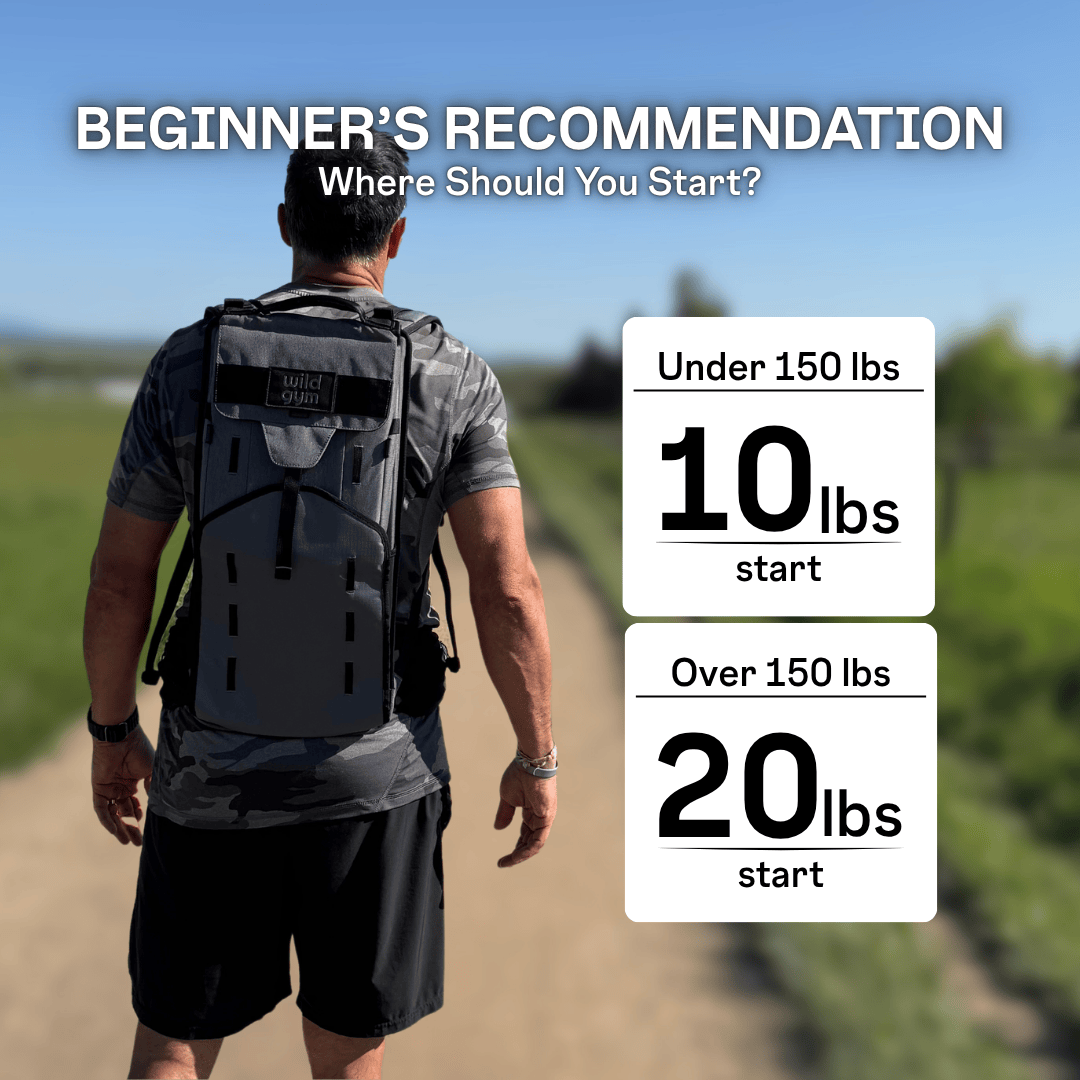
- start with 10–15 lb
- build to 20 lb
- then 30 lb (only after you’ve earned it)
That progression can build:
- leg strength
- bone-loading stimulus
- cardiovascular fitness
- posture and “carry strength”
- durability without high impact
Comparison table: Rucking pack vs tactical pack vs weighted vest
|
Feature |
Purpose-built Rucking pack |
Tactical backpack |
Weighted vest |
|
Comfort for 30–60 min walks |
High (if designed for plates + fit) |
Mixed (often stiff/bulky) |
Mixed (often restrictive) |
|
Stability (no bounce) |
High (plate pocket) |
Mixed (depends on setup) |
High (but can shift if fit is off) |
|
Adjustable progression |
Easy (plates in small increments) |
Possible (but often clunky) |
Often limited (may require multiple vests) |
|
Storage (water, phone, layers) |
Yes |
Yes |
Usually no |
|
Heat / sweat |
Moderate |
Moderate |
Often high |
|
Long-term consistency |
High |
Mixed |
Mixed (odor/comfort issues) |
How to choose the best Rucking pack for women
Here’s the checklist I’d use if I was buying for my wife, my sister, or a friend.
- Does the weight ride high and close?
- Is the weight stable (no bounce)?
- Does it fit your torso and shoulders comfortably?
- Can you adjust load easily over time?
- Does it have storage for real-life use (water, phone, layer)?
- Is it breathable enough that you’ll actually wear it consistently?
- Does it match your style so you’ll grab it without hesitation?
The best Ruck is the one you’ll use.
How to get started Rucking (beginner plan for women)

You don’t need to overthink this.
Step 1: Start light
- 10–15 lb is a great starting point for many women.
- If you already walk a lot, 20 lb may be fine.
- If you’re newer to exercise, start lighter and earn your way up.
Step 2: Keep it short and repeatable
- 20–30 minutes
- 2–3 times per week
- flat route
Step 3: Progress one thing at a time
Pick ONE per week:
- add 5–10 minutes
- add a gentle hill
- add 5 lb
Don’t stack all three.
Step 4: Add a tiny bit of mobility after
Calves + hip flexors + upper back.
Five minutes. Done.
Why so many women are starting to Ruck
Because Rucking is effective and sustainable.
It helps build:
- strength
- aerobic fitness
- posture
- resilience
- bone-loading stimulus (especially when paired with strength training)
And it doesn’t require:
- running
- jumping
- high-impact punishment
You simply walk with weight.
That simplicity is the magic.
If you’re looking for the best Rucking pack for women, don’t focus on what looks the most tactical.
Focus on what you’ll actually use consistently.
A Ruck should feel:
- comfortable
- stable
- simple
- durable
And it should support a lifestyle of strength, adventure, and longevity.
Walk with weight.
Build strength that lasts.
Sources / citations
-
Wild Gym Rucking fundamentals and beginner guidance (start light, progress gradually)
- General exercise science principle: consistency + progressive overload drives adaptation
- Practical gear ergonomics: load placement and stability affect comfort and posture
FAQ
Use this text to share information about your product or shipping policies.
What’s the best rucking pack for women?
One that carries weight high and stable, fits your torso and shoulders, and makes progression easy. For most women, a purpose-built rucking pack is better than a tactical pack or weighted vest.
Is a weighted vest better than a rucking backpack for women?
Usually no for long-term training. Vests are quick, but many are hot, hard to progress, can smell weird, and don’t carry anything. A ruck is more adjustable and practical for real life.
What weight should a beginner start with?
Most beginners do great starting at 10–20 lb. Many women start at 10–15 lb and build up gradually.
How often should beginners ruck?
Start with 2–3x/week for 20–30 minutes. You can build from there.
Will rucking make my shoulders and neck tight?
It can if the pack fits poorly, the weight rides low, or you go too heavy too soon. A well-designed ruck + good setup solves most of this.
Do I need a “women’s ruck” specifically?
Not necessarily. You need a pack that fits your torso and shoulders and carries weight correctly. Fit and adjustability are the real “women’s features.”
Is rucking good for bone density?
Rucking is weight-bearing and provides bone-loading stimulus, especially when combined with strength training and progressed over time.
What if I’m short?
Torso fit matters even more. A pack that’s adjustable and keeps weight high is a big win for shorter frames.
Can I ruck while walking my dog?
Yes—this is one of the best “habit stack” workouts on the planet.
What’s the biggest mistake beginners make?
Going too heavy too soon, and/or using a normal backpack where the weight bounces around.
Featured collection