Weighted Walking: The Missing Piece of Modern Fitness

Weighted walking is one of the most effective and overlooked ways to improve fitness. By simply adding weight to walking, you increase calorie burn, build strength, and improve cardiovascular health—without the impact of running or the complexity of gym workouts. Most people are already walking, but not getting the full benefit. Rucking—walking with weight in a Ruck—is the most practical, scalable, and sustainable way to do weighted walking. For most adults, it’s one of the simplest ways to build strength, lose weight, and stay consistent.
Everyone Is Walking. Almost No One Is Getting the Full Benefit.

Walking is everywhere.
Step goals.
Fitness trackers.
Daily walks.
And it’s good.
But it’s incomplete.
Because walking by itself eventually stops challenging your body.
You adapt.
And once you adapt, you stop progressing.
The Simple Upgrade Most People Miss
There’s a very small change that creates a very big difference:
Add weight.
That’s it.
Now your body has to:
- work harder
- stabilize more
- produce more force
And suddenly, a basic walk becomes a real training session.
This Used to Be Normal Human Movement
Weighted walking isn’t new.
It’s actually how humans moved for most of history.
Before cars, before gyms, before “workouts,” people spent their days:
- Carrying Tools
- Carrying Water
- Carrying Food
- Carrying Firewood
- Carrying Weapons
- Carrying Supplies For Travel
- Carrying Children
If a hunt was successful, you didn’t just celebrate.
You carried it home.
If you needed food, you didn’t order it.
You went and got it.
On foot.
Under load.
This wasn’t exercise.
This was life.
What Changed (And Why It Matters)
Modern life removed this completely.
Now we:
- sit more
- move less
- carry almost nothing
We still walk.
But we don’t carry.
And that missing piece matters.
Because your body still expects:
- Load
- Resistance
- Tension Through Movement
Without it, you lose:
- strength
- bone density
- durability
Weighted walking—and especially Rucking—is simply putting that piece back.
Why Weighted Walking Works So Well

This isn’t complicated.
It works because it hits three things at once:
1. More Demand Without More Impact
Running increases intensity—but also impact.
Weighted walking increases intensity without pounding your joints.
That’s a huge advantage.
2. Strength + Cardio at the Same Time
Most workouts separate these.
- lift weights → strength
- do cardio → endurance
Weighted walking blends them.
You’re:
- moving continuously
- under load
That’s a powerful combination.
3. It’s Easy to Repeat
This is the biggest factor.
If something is:
- too hard
- too painful
- too time-consuming
you won’t do it consistently.
Weighted walking solves that.
Why Most People Don’t Do This
Because it’s not flashy.
There’s no:
- hype
- extreme effort
- “crush yourself” mentality
And fitness culture tends to ignore anything that looks simple.
But simple is what works long-term.
The Best Way to Do Weighted Walking

There are a few ways people try this:
- holding weights
- wearing ankle weights
- using weighted vests
But most of these have issues.
Why a Ruck Is the Best Option
Rucking—walking with weight in a backpack—is the most effective way to do this.
Because it allows you to:
- Adjust Weight Easily
- Carry Load Close To Your Body
- Stay Comfortable For Longer Sessions
- Progress Over Time Without Buying New Gear
It turns weighted walking into something sustainable.
What Happens When You Start Doing This Consistently
If you add weighted walking into your routine, you’ll start to notice:
- Higher Heart Rate At The Same Pace
- Stronger Legs And Posture
- Improved Endurance
- Better Body Composition
- More Energy
And it doesn’t require extreme effort.
Who This Is Perfect For
Weighted walking is especially powerful if you:
- Don’t Like Running
- Have Joint Issues
- Are Over 35–40
- Are Trying To Lose Weight
- Have Struggled With Consistency
It meets you where you are.
How To Start (Simple Version)

You don’t need a complex plan.
Start here:
Step 1
- Add 10–15 Lb To A Ruck
Step 2
- Walk For 20–30 Minutes
Step 3
- Do It 3x Per Week
Step 4
- Progress Slowly Over Time
The Bigger Insight
Most people are looking for:
- the perfect workout
- the optimal plan
- the fastest results
But they ignore something more important:
What can I do consistently for the next year?
Weighted walking answers that question.
Final Thought
You don’t need to overhaul your life.
You don’t need extreme workouts.
You don’t need to “start over.”
You’re already walking.
Now just make it count.
Add some weight.
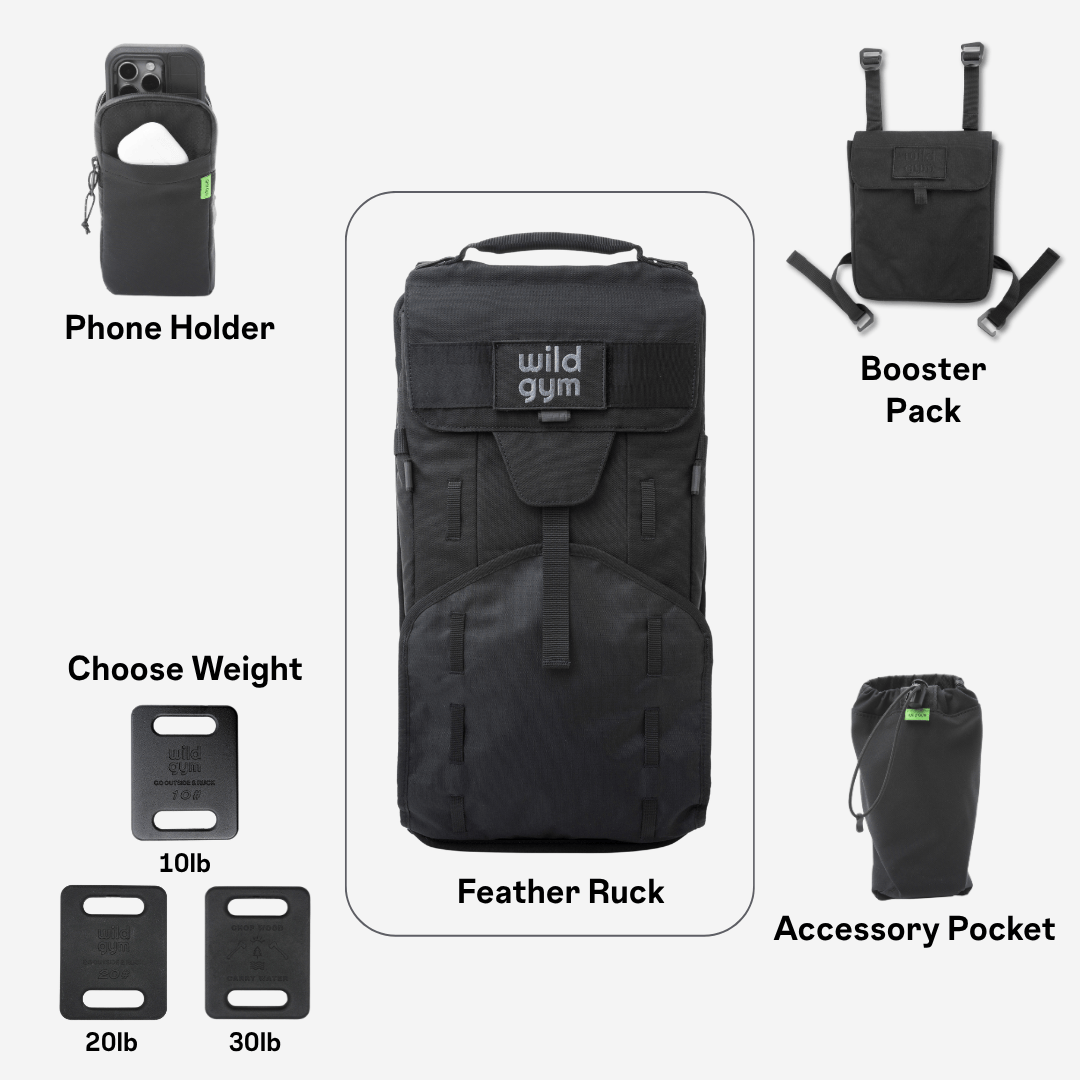
Throw it in a Ruck.
Go outside.
That’s the upgrade most people are missing.
FAQ
Use this text to share information about your product or shipping policies.
What is rucking in one sentence?
Rucking is walking a set time or distance while carrying weight in a backpack.
Is rucking just hiking?
It’s related. Hiking is usually trails, terrain, and gear. Rucking is defined by the added weight, and it can be done anywhere, sidewalks included.
Do I need a special rucking backpack?
No. You can start with any backpack. But if you want it to be comfortable and scalable, a ruck with stable weight placement is a game-changer.
How much weight should I start with?
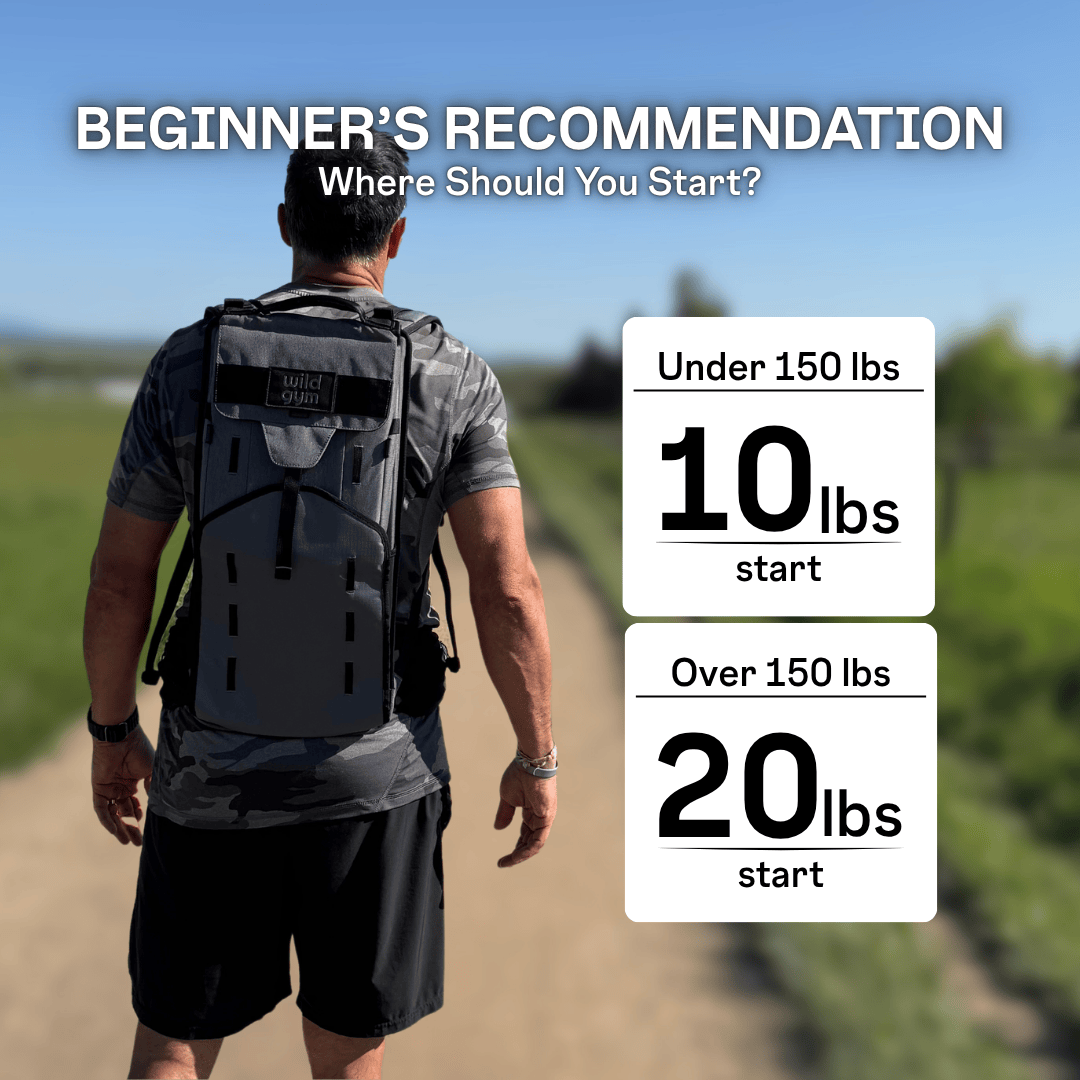
Wild Gym recommends 10–20 lb, with a simple rule: over 150 lb start at 20; under 150 start at 10.
How often should beginners ruck?
Start “a few times per week.” Wild Gym suggests starting with rucking a few times per week and building from there.
How long should a beginner ruck be?
Start with 20–30 minutes. Add time before you add a bunch of weight.
What pace should I ruck?
Brisk but controlled. You should be able to speak in sentences. If you’re redlining, it’s too heavy or too fast.
Does rucking build muscle?
It builds strength endurance and “carry strength.” If you want more muscle and bone stimulus, pair rucking with 2–3 simple strength sessions per week.
Is rucking safe for knees?
For many people it’s lower impact than running, but it’s not immune to overuse if you ramp too fast. Start light, keep the load stable, and avoid steep hills early.
What’s the best way to start if I’m totally out of shape?
Start with walking first. WebMD suggests you should be able to walk about 30 minutes comfortably before adding load. Then add 10 pounds and keep it short.
Featured collection