Rucking vs Hiking: What’s the Difference (And Which Should You Do?)

Rucking and hiking are closely related, but they’re not the same thing. Hiking is about the experience—terrain, scenery, exploration. Rucking is about training—walking with intentional load, structure, and progression. You can hike without training, but you can’t Ruck without purpose. If your goal is fitness, strength, and long-term consistency, Rucking is the better tool. If your goal is adventure and time in nature, hiking wins. The best approach for most people is to use Rucking as a foundation and layer hiking on top of it.
Rucking and hiking have a lot in common - the biggest difference is that Rucking is intentionally adding weight for a more effective workout while when hiking the goal is generally to go as light as possible.
You’re Probably Already Doing This… You Just Haven’t Leveled It Up Yet

Most people who ask this question are already hiking.
They:
- go on trails
- carry a backpack
- spend time outside
But they treat it like a casual activity.
No structure.
No progression.
No real training intent.
That’s the difference.
Rucking takes something humans already do—and turns it into something that actually builds your body over time.
The Real Difference
Let’s simplify this.
Hiking Is Experience-Based
- Focus On Scenery
- Focus On Exploration
- Pace Is Variable
- Load Is Inconsistent
You go where you want.
You carry what you need.
You stop when you feel like it.
Nothing wrong with that.
Rucking Is Training-Based
- Focus On Consistency
- Focus On Load
- Focus On Progression
- Focus On Repeatability
You’re not just walking.
You’re training your body under load.
Why This Difference Actually Matters
This isn’t just semantics.
It changes what you get out of it.
Hiking Gives You:
- Fresh Air
- Time Outside
- Mental Reset
- Adventure
All great things.
Rucking Gives You:
- Cardio Training
- Strength Endurance
- Postural Strength
- Bone Loading
- Consistency
This is where your body actually changes.
The Problem With Only Hiking
Hiking is great.
But it’s inconsistent.
You might:
- go once a week
- go once a month
- go hard one day, then nothing
That’s not enough to drive real adaptation.
Fitness doesn’t come from occasional effort.
It comes from repeatable stress over time.
Why Rucking Is the Better Foundation

If your goal is:
- Lose Weight
- Get Stronger
- Improve Endurance
- Stay Healthy Long-Term
Rucking wins.
Because it’s:
- Predictable
- Scalable
- Repeatable
You can do it:
- 3–5 times per week
- for 30–60 minutes
- with progressive load
That’s how results happen.
The Best Answer (Most People Miss This)
This isn’t either/or.
The best approach is:
👉 Ruck during the week
👉 Hike on the weekend
Rucking builds the engine.
Hiking uses it.
How To Turn Your Hikes Into Rucks

This is where things get interesting.
If you’re already hiking, you don’t need to start from scratch.
You just need to shift your intent.
Step 1: Add Intentional Weight
- Start With 10–20 Lb
- Keep it consistent
Step 2: Control Your Pace
- Walk Steady
- Avoid constant stopping
- Treat it like training
Step 3: Track What You Do
- Time
- Distance
- Weight
Now you can actually improve.
Step 4: Repeat It Weekly
This is the part most people skip.
Consistency turns activity into training.
Who Should Focus More on Rucking
You should lean toward Rucking if you:
- Want Measurable Progress
- Struggle With Consistency
- Want To Lose Weight
- Don’t Want High Impact Training
- Are Getting Back Into Fitness
Who Should Just Hike (For Now)

Stick with hiking if you:
- Just Want Time Outside
- Don’t Care About Training Progression
- Are New To Movement And Need A Starting Point
But understand:
You’re leaving a lot of potential on the table.
The Bigger Idea
Humans didn’t evolve to just “work out.”
We evolved to:
- walk
- carry things
- move through terrain
Rucking taps directly into that.
It’s not a trend.
It’s a return to something fundamental.
Final Thought
If you already hike, you’re closer than you think.
You don’t need a new activity.
You just need a new mindset.
Add some weight.
Add some structure.
Do it consistently.
That’s the difference between:
👉 Being active
and
👉 Actually getting stronger
FAQ
Use this text to share information about your product or shipping policies.
What is rucking in one sentence?
Rucking is walking a set time or distance while carrying weight in a backpack.
Is rucking just hiking?
It’s related. Hiking is usually trails, terrain, and gear. Rucking is defined by the added weight, and it can be done anywhere, sidewalks included.
Do I need a special rucking backpack?
No. You can start with any backpack. But if you want it to be comfortable and scalable, a ruck with stable weight placement is a game-changer.
How much weight should I start with?
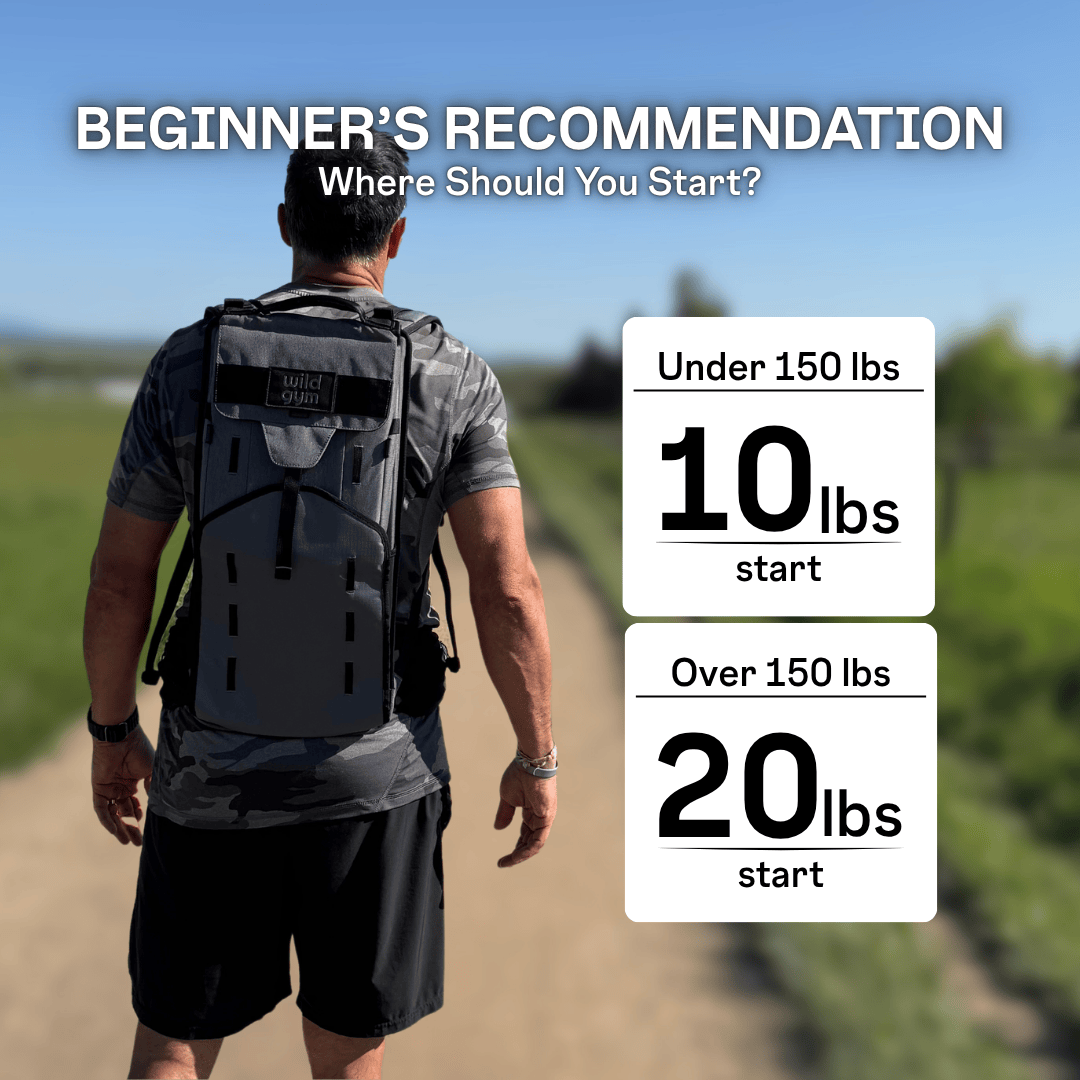
Wild Gym recommends 10–20 lb, with a simple rule: over 150 lb start at 20; under 150 start at 10.
How often should beginners ruck?
Start “a few times per week.” Wild Gym suggests starting with rucking a few times per week and building from there.
How long should a beginner ruck be?
Start with 20–30 minutes. Add time before you add a bunch of weight.
What pace should I ruck?
Brisk but controlled. You should be able to speak in sentences. If you’re redlining, it’s too heavy or too fast.
Does rucking build muscle?
It builds strength endurance and “carry strength.” If you want more muscle and bone stimulus, pair rucking with 2–3 simple strength sessions per week.
Is rucking safe for knees?
For many people it’s lower impact than running, but it’s not immune to overuse if you ramp too fast. Start light, keep the load stable, and avoid steep hills early.
What’s the best way to start if I’m totally out of shape?
Start with walking first. WebMD suggests you should be able to walk about 30 minutes comfortably before adding load. Then add 10 pounds and keep it short.
Featured collection