Best Rucking Backpack

Rucking is the new running and it seems like everyone is talking about it.
Dr. Andrew Huberman, Michael Easter, and even Oprah are are putting on Ruck Backpacks for their workouts.
What is the Best Backpack for Rucking?
If you are interested in adding Rucking into your fitness routine chances are you already have a "Ruck Pack" to at least get you started. Grab that old backpack off your closet floor, put in some weight and go for a walk. It's that simple.
You can use basically anything for weight and some good options include:
- Water bottles (1 gallon = 8.34 pounds)
- Dumbbell
- Kettlebell
- Sand*
- Gravel*
- Bricks
- Rocks
- Chain
*Put these into a stuff sack or dry bag to keep them contained.
Once you start to get over 10 pounds in your Rucking Backpack, you may want to to consider getting a Rucking-specific pack.
Why the wild gym Ruck Backpack is the best Rucking Backpack.
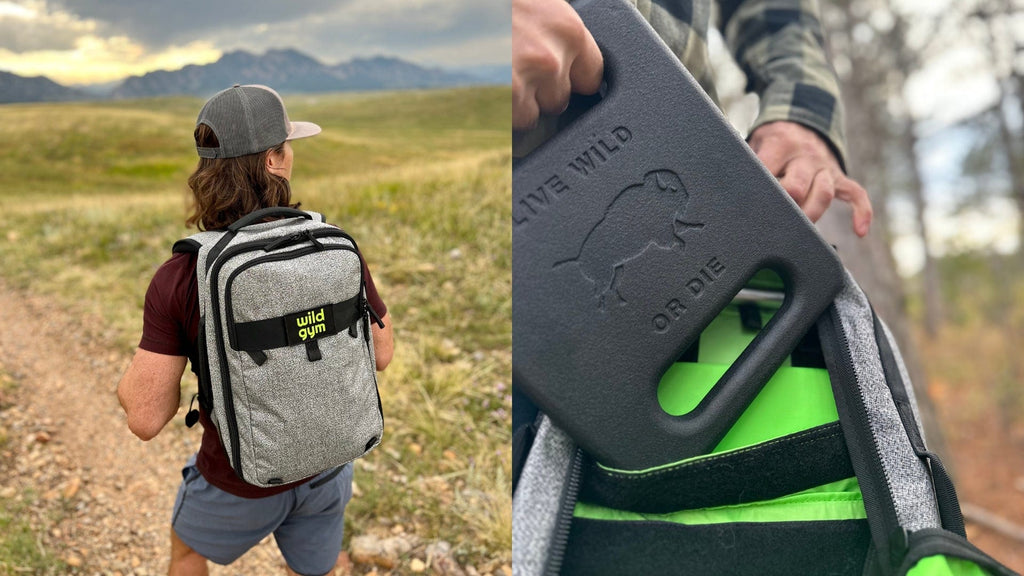
The wild gym Rucking Backpack is a hybrid design based off of trail running packs and hunting packs. Trail running packs are designed to hug your torso which helps to disperse the load across your body instead of just the tops of your shoulders. The wild gym Ruck uses a similar strap system which means the weight gets spread across your body for superior comfort. Contrast this to other packs where all the weight ends up concentrated on your shoulders and traps leading to a sore neck and an uncomfortable Ruck.
Hunting packs are designed to literally carry hundreds of pounds and we wanted our Ruck to live up to that standard. The internal aluminum frame means that even if you were to put in hundreds of pounds the pack will maintain its shape and fit. This means a more comfortable Rucking experience.
Our extreme-padding shoulder straps also have special pockets for your phone, water bottle (sold separately) and even a few snacks. There is also a port for a hydration bladder hose. This means you have access to your essentials without having to take off your pack.
The complete wild gym Rucking Backpack includes a hip belt that helps to further disperse the weight across your body for extra comfort. (make sure you select 'Complete' when adding to your cart)
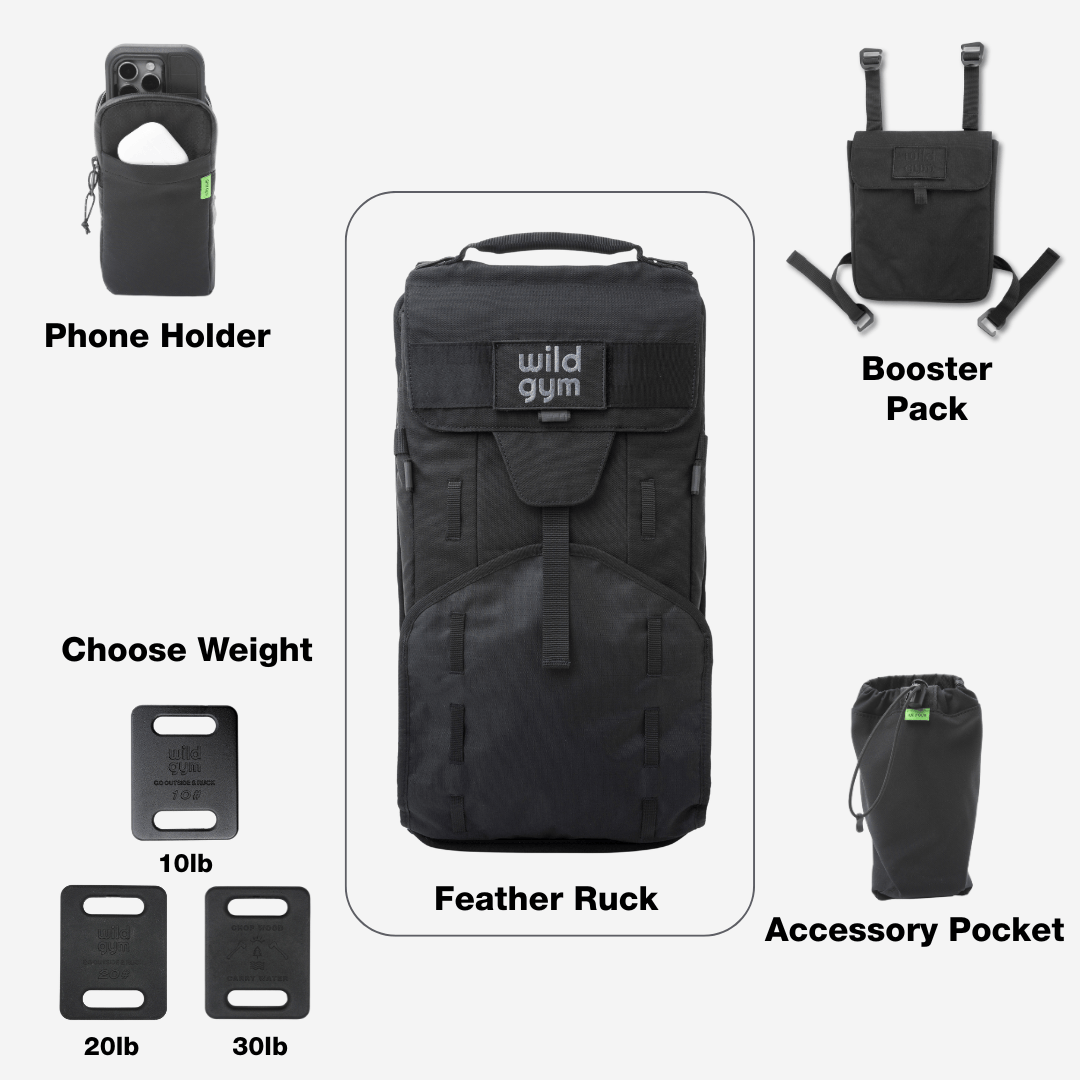
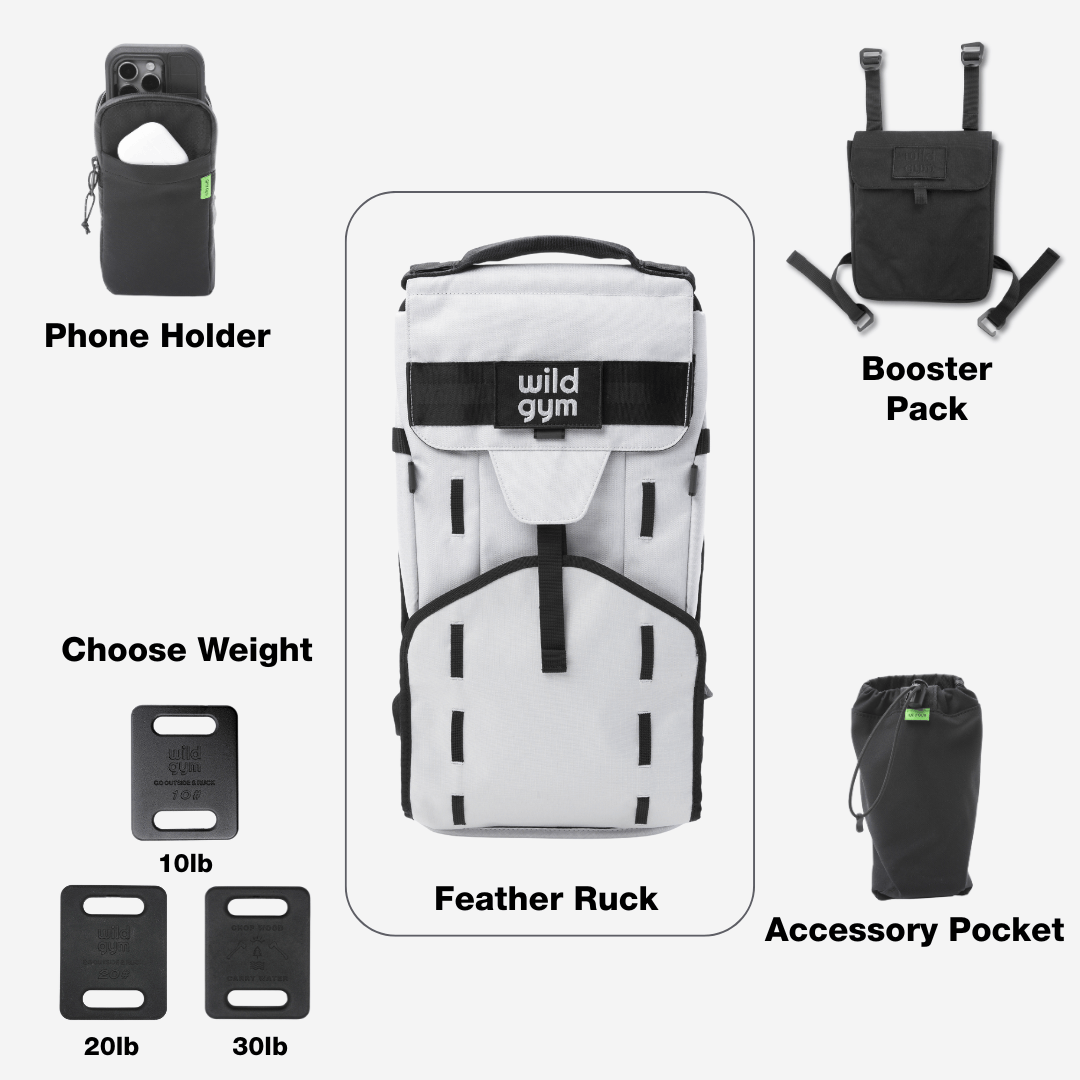
The complete Ruck Backpack also includes a cargo net carry accessory, a self-fill weight bag - perfect for using sand or gravel, external pocket attachment perfect for tossing in a jacket, and as mentioned - removable hip belt.
For the best Rucking experience we recommend also getting one of our premium cast iron Ruck Weights designed to fit perfectly into our Ruck.
Upon purchase, you will also be sent our wild gym Guide to Rucking which details how to get started and includes several Rucking training programs:
- Time-based Rucking
- Distance-based Rucking
- Rucking Workouts
- Rucking + Suspension Training Workouts
You can find the wild gym Rucking Backpack here.
Conclusion
You can get started Rucking today with pretty much any pack - so what are you waiting for? Start with 5-10 pounds max and slowly increase both the weight and distance over time. As you start to advance your Rucking practice consider upgrading to a Rucking-specific pack. Much love and we'll see you out there!
Have a question about Rucking? We LOVE hearing from the wild gym Ruck Crew so please do not hesitate to send us a note.
info@wildgym.com
FAQ
Use this text to share information about your product or shipping policies.
What is rucking in one sentence?
Rucking is walking a set time or distance while carrying weight in a backpack.
Is rucking just hiking?
It’s related. Hiking is usually trails, terrain, and gear. Rucking is defined by the added weight, and it can be done anywhere, sidewalks included.
Do I need a special rucking backpack?
No. You can start with any backpack. But if you want it to be comfortable and scalable, a ruck with stable weight placement is a game-changer.
How much weight should I start with?
Wild Gym recommends 10–20 lb, with a simple rule: over 150 lb start at 20; under 150 start at 10.
How often should beginners ruck?
Start “a few times per week.” Wild Gym suggests starting with rucking a few times per week and building from there.
How long should a beginner ruck be?
Start with 20–30 minutes. Add time before you add a bunch of weight.
What pace should I ruck?
Brisk but controlled. You should be able to speak in sentences. If you’re redlining, it’s too heavy or too fast.
Does rucking build muscle?
It builds strength endurance and “carry strength.” If you want more muscle and bone stimulus, pair rucking with 2–3 simple strength sessions per week.
Is rucking safe for knees?
For many people it’s lower impact than running, but it’s not immune to overuse if you ramp too fast. Start light, keep the load stable, and avoid steep hills early.
What’s the best way to start if I’m totally out of shape?
Start with walking first. WebMD suggests you should be able to walk about 30 minutes comfortably before adding load. Then add 10 pounds and keep it short.
Featured collection